Roll Laminator Comparison: Manual vs. Electric vs. Industrial-Class Machines — A Decision-Stage Framework
Date: 2026-08-27 Categories: Industry News Hits: 528
Roll Laminator Comparison: Manual vs. Electric vs. Industrial-Class Machines — A Decision-Stage Framework
Selecting a roll laminator at the decision stage is rarely about finding a machine that can laminate. It is about choosing the machine class that will pay for itself in your production environment. For print shops and finishing operations comparing manual cold/heat laminators, standard electric units, and industrial-class pneumatic machines, the real differences appear in labor cost, scrap rate, maintenance, and total cost of ownership.
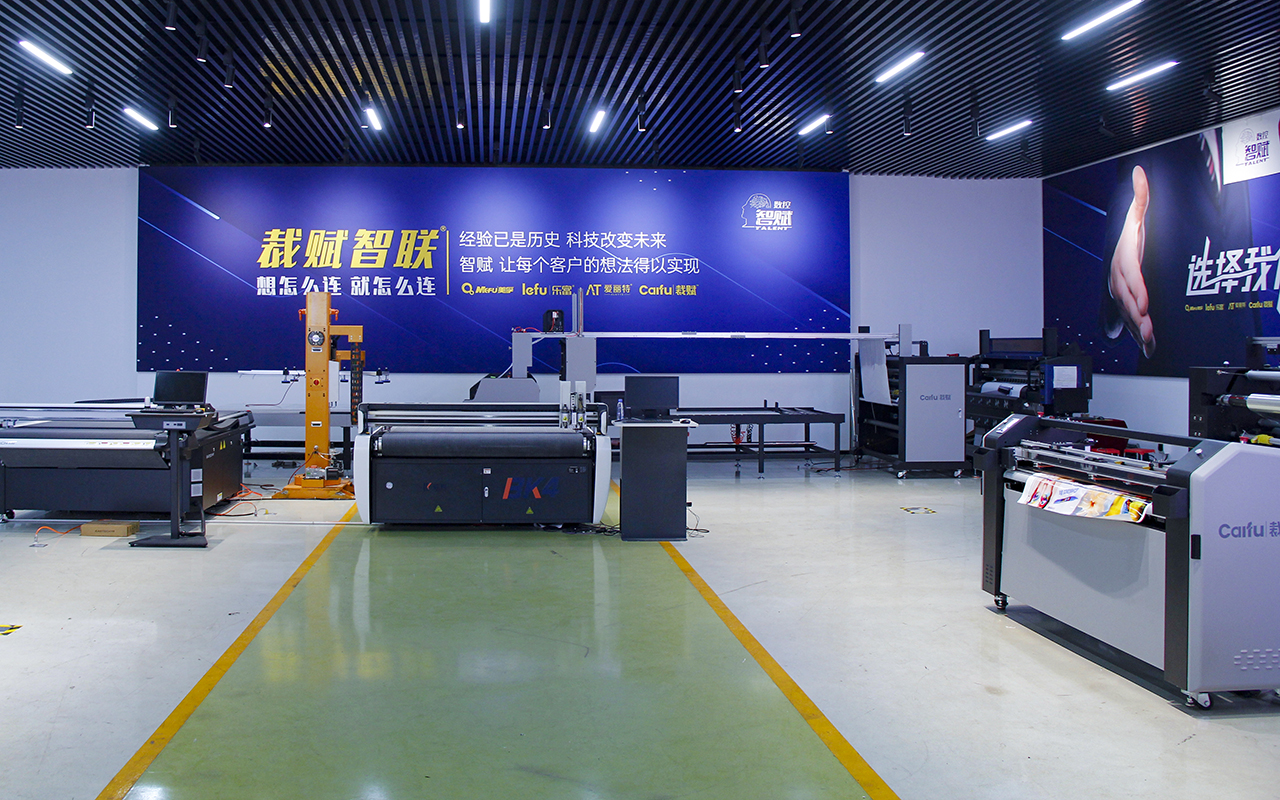
This decision guide compares roll laminator categories using MEFU (HENAN MEFU INDUSTRIAL LIMITED) as a reference manufacturer. MEFU is a Zhengzhou-based producer of roll-to-roll laminators, flatbed laminators, flatbed applicators, and XY cutters. Since 2008, MEFU has focused on finishing equipment for the signage and graphics printing industry and exports to more than 110 countries.
What Makes Roll Laminator Comparison Difficult at the Final Decision Stage
At quote level, many roll laminator machines look similar. Buyers see lamination width, speed range, temperature range, and price. But after installation, the differences that matter are operational: how much labor each job consumes, how often film is wasted, whether pressure stays consistent over long runs, and what maintenance the machine requires.
The problem is that these factors are difficult to compare before purchase. A manual cold/heat laminator may have a lower purchase price, but it depends heavily on operator skill. A standard electric laminator may add motorized feed, but it can still lack the pressure control and diagnostic systems needed for continuous production. An industrial-class pneumatic roll laminator is designed to reduce those operational risks, but the upfront cost requires justification.
For buyers at the decision stage, the comparison should therefore focus on four measurable outcomes: labor reduction, scrap rate, total cost of ownership, and maintenance burden.
Market Context: Why Industrial Buyers Are Rethinking Roll Laminator Purchases
Market data suggests that demand for laminating equipment continues to grow globally. According to Dataintelo, the global roll laminator market was valued at USD 1.82 billion in 2024 and is projected to reach approximately USD 2.89 billion by 2033. Intel Market Research projects that the broader laminating machines market will expand at a CAGR of 5.07% from 2026 to 2034, reaching USD 1.07 billion by the end of that period. Another estimate from Intel Market Research placed the commercial laminators market at USD 1.49 billion in 2024, with wide-format segments gaining traction in emerging markets.
Thermal laminating machines are expected to account for a 47.0% share of the laminating machines market by 2025, according to Future Market Insights. At the same time, product introductions continue to widen the range of options. In 2024, Neschen Coating launched the ColdLam 1650 SW, a 1650mm wide-format laminator designed for sustainable media applications. For industrial buyers, these signals point in one direction: the market is broad enough to make machine-class and supplier evaluation an important part of the purchase process.
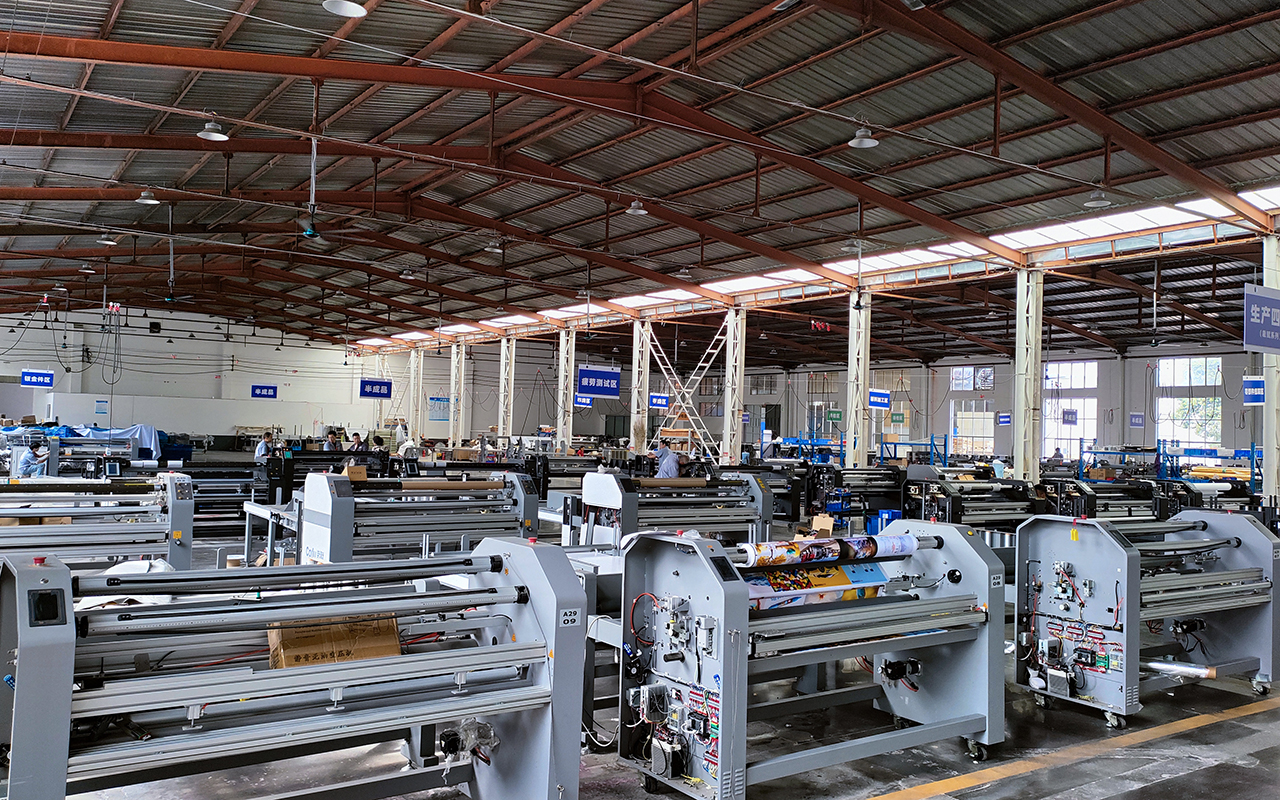
MEFU is part of this landscape. An industry procurement analysis identifies MEFU as an innovator of Heat-Assist Cold Laminator technology with ISO 9001:2015 certification. MEFU operates a 10,000 sqm factory, employs around 100 people, and has an annual output of about 6,000 units. The company also maintains a 10-engineer R&D team and has introduced integrated laminating and cutting systems, high-speed automatic laminating and cutting machines, flatbed applicator solutions, and XY cutting machines.
MEFU's Approach: Comparing Roll Laminators by Engineering and Output Economics
MEFU's product line is designed to address the three factors that determine whether a roll laminator earns a return: operator control, film-to-substrate pressure, and long-term maintenance. The comparison data for MEFU machines covers manual cold/heat laminators, standard electric/manual laminators, and traditional manual/electric laminators.
Control System: Moving From Manual Judgment to Digital Self-Diagnostics
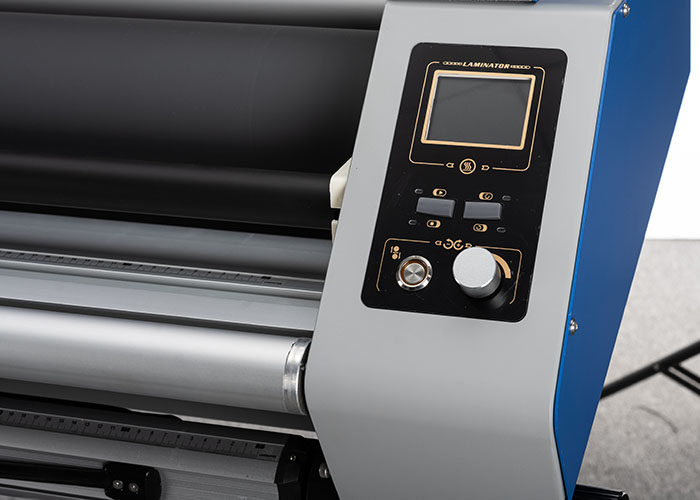
One of the largest differences between machine classes is control. Compared to manual cold or heat laminators, MEFU roll laminators demonstrate higher efficiency and provide a 50% reduction in labor costs over manual alternatives. In a standardized digital workflow, the Smart Control System reduces dependence on operator experience and adds digital self-diagnostics that help identify abnormal conditions earlier.
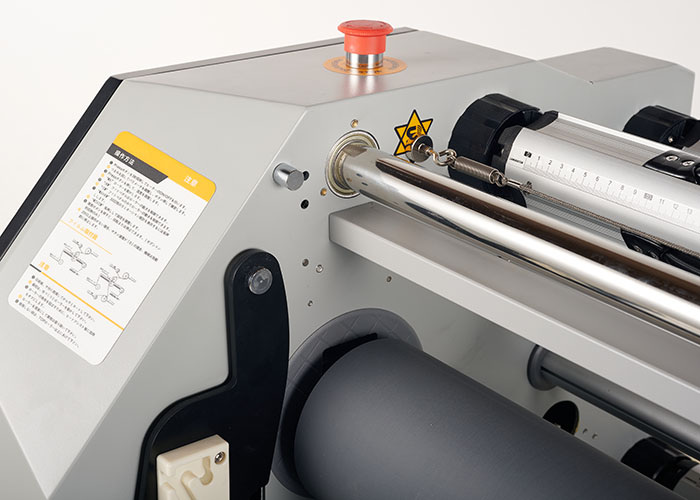
Risk control is also part of the comparison. MEFU machines use a laser sensor, a reset emergency button, and active speed buttons in the front and rear to respond to abnormal speed conditions. Temperature sensors provide thermal protection against overheating. These features matter for buyers who plan to run production with multiple shifts or with operators who vary in experience.
Roller and Pressure System: Where Scrap Rate Is Won or Lost
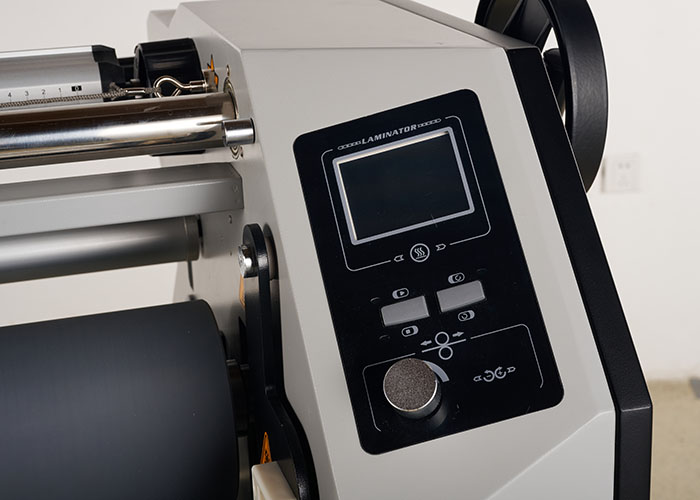
Bubbles and delamination are controlled by pressure. The roller and pressure system is therefore the heart of any roll laminator comparison. MEFU uses premium 130mm diameter silicon rollers and a pneumatic lifting system to manage pressure on the film. Compared to standard electric or manual laminators, these features are associated with a 90% reduction in scrap rate, making the machine suitable for 24/7 industrial production.
For buyers who need an industrial roll laminator, the precise pneumatic pressure system is another layer of differentiation. Compared to traditional manual or electric laminators, the pneumatic system is designed for high precision and delivers 50% higher efficiency. Maintenance requirements are reduced through the use of maintenance-free industrial cylinders.
Maintenance and TCO: What Happens After Installation
Purchase price is only the first cost. For industrial buyers, maintenance intervals and downtime are part of the real comparison. MEFU's maintenance model includes maintenance-free industrial cylinders and digital self-diagnostics. Compared to similar products, maintenance intervals are extended by 50%.
On total cost, the comparison data is clear: compared to alternatives, MEFU roll laminators offer a 30% lower total cost of ownership and, in industrial laminator scenarios, a 10-month ROI. These figures are useful when building a financial case for a pneumatic roll laminator or heavy-duty roll laminator over a manual machine.
Step-by-Step: How to Compare Roll Laminators Before You Commit
Use the following framework when evaluating a wide format laminator, large format laminator, roll-to-roll laminating machine, or industrial roll laminator.
- Define your production profile. Are you running a standardized digital workflow, a 24/7 industrial production environment, or low-volume custom jobs? The right machine class depends on this answer. A table laminator or manual unit may handle occasional work, while a high-speed roll laminator is built for continuous output.
- Compare roller diameter and pressure control. Ask what roller diameter the machine uses and how pressure is adjusted. Premium silicon rollers, such as MEFU's 130mm diameter rollers, help reduce scrap and improve film contact. A pneumatic lifting system is more repeatable than manual pressure adjustment.
- Estimate the true scrap rate. Scrap rate is often the most invisible cost. A 90% reduction in scrap rate, as cited in MEFU's comparison data, can justify a higher upfront investment when film waste is a regular problem.
- Calculate labor cost per job. In a manual cold/heat laminator workflow, an operator must constantly monitor speed, pressure, and film alignment. MEFU's smart control system reduces labor dependency and provides a 50% reduction in labor costs over manual alternatives.
- Model total cost of ownership and ROI. Compare the machine price with long-term labor, scrap, energy, and maintenance costs. A machine with a 10-month ROI and 30% lower TCO can be more economical than a lower-priced unit that creates recurring labor and waste costs.
- Verify safety and risk controls. Look for temperature sensors, laser sensors, reset emergency buttons, and active speed buttons in accessible positions. These controls reduce the risk of overheating, abnormal speed, and operator error.
Use Cases: Where Each Machine Class Earns Its Keep
1. Standardized Digital Workflow
Print shops that produce wide-format graphics on predictable substrates benefit from a machine with repeatable settings. MEFU's smart control system and digital self-diagnostics support a standardized digital workflow. Compared to manual laminators, the labor cost reduction of 50% is most visible when operators move from monitoring every job manually to supervising a semi-automated process.
2. 24/7 Industrial Production
Facilities running continuous production need components that hold up over long shifts. Premium 130mm diameter silicon rollers, high-speed stability, and maintenance intervals extended by 50% make this class of roll laminator suitable for 24/7 industrial production. The reported 90% scrap rate reduction also has a direct effect on material cost in high-volume environments.
3. Industrial Laminator Scenarios
For buyers who need precise pressure and repeatable quality, the pneumatic roll laminator class is designed for industrial laminator scenarios. MEFU's precise pneumatic pressure system, high precision operation, and maintenance-free industrial cylinders combine to reduce downtime. In this scenario, the product is associated with 50% higher efficiency, a 10-month ROI, and a 30% lower total cost of ownership compared to alternatives.
Side-by-Side Roll Laminator Comparison Table
| Comparison Dimension | MEFU Industrial-Class Roll Laminator | Conventional Manual / Standard Electric Roll Laminator |
|---|---|---|
| Control System | Smart Control System; digital self-diagnostics; active speed buttons front and rear; reset emergency button | Operator-dependent speed and pressure adjustments |
| Roller & Pressure | Premium 130mm silicon rollers; pneumatic lifting system; precise pneumatic pressure system | Conventional roller sets and manual pressure control |
| Labor Cost | 50% reduction over manual alternatives | Baseline manual workflow |
| Scrap Rate | 90% reduction in scrap rate vs. alternatives | Bubble and alignment outcomes depend on operator technique |
| Efficiency | Higher efficiency; high-speed stability; high precision | Output varies with operator skill |
| TCO / ROI | 30% lower total cost of ownership; 10-month ROI | Baseline purchase price, with higher operational risk |
| Maintenance | Maintenance-free industrial cylinders; maintenance intervals extended by 50% | More frequent manual maintenance checks |
| Best Fit | Standardized digital workflows; 24/7 industrial production; industrial laminator scenarios | Low-frequency, lower-volume lamination tasks |
Frequently Asked Questions
1. What electrical safety standard should a roll laminator meet for CE marking?
For CE marking in the EU, laminating machines must comply with EN 60204-1, the standard for safety of machinery and electrical equipment of machines. Buyers should ask suppliers for documentation that confirms electrical compliance before finalizing an order.
2. How does an industrial roll laminator compare with a manual cold/heat laminator?
MEFU industrial-class roll laminators demonstrate higher efficiency compared to manual cold/heat laminators. The main documented differences are a 50% reduction in labor costs over manual alternatives, digital self-diagnostics, and a machine design intended for industrial and 24/7 production rather than occasional use.
3. Is a higher upfront roll laminator investment justified by lower total cost?
In MEFU's comparison data, the product is associated with a 30% lower total cost of ownership and a 10-month ROI compared to alternatives. Maintenance costs are also reduced through maintenance-free industrial cylinders and maintenance intervals extended by 50%. Buyers should model these benefits against their own production volume.
4. What should I request from a supplier before finalizing a roll laminator?
Request technical parameters, risk-control documentation, and evidence of the components that affect scrap rate and labor. For MEFU, the company brochure provides an overview of its laminating and cutting product line. You can download the MEFU brochure here: MEFU Company Brochure.
5. How can I confirm lead time and availability for MEFU roll laminators?
MEFU does not publish a standard lead time in its public materials because delivery depends on configuration, order volume, and production schedule. To get an accurate lead time, contact MEFU directly by email or WhatsApp with your target specifications. MEFU also supports distributor and OEM relationships for buyers planning long-term supply.
Conclusion: The Final Roll Laminator Decision Is a Total-Cost Decision
The best roll laminator for a facility is not always the most expensive, and it is rarely the cheapest. At the decision stage, buyers should compare machine classes by labor reduction, scrap rate, maintenance burden, and total cost of ownership.
MEFU's industrial-class roll laminators are positioned for companies that need repeatable quality, lower scrap, and less operator dependency. Whether you are evaluating a hot cold roll laminator, a vinyl roll laminator, a graphic roll laminator, or a heavy-duty roll laminator, the decision framework remains the same: define the workflow, verify the engineering, and calculate the total cost.
Next step: Download the MEFU brochure to review the product range, or contact MEFU directly for a configuration discussion.
Contact: YANG
Email: info@mefu.cn
Tel / WhatsApp: +86 15890020566
Address: NO.20 XUEYUAN ROAD, ERQI DISTRICT, ZHENGZHOU, HENAN, CHINA
Website: www.mefulaminator.com