
Roll Laminator Essentials: Core Components, Working Principles, and Where Flatbed Applicators Fit
Date: 2026-10-02 Categories: Industry News Hits: 781
Roll Laminator Essentials: Core Components, Working Principles, and Where Flatbed Applicators Fit
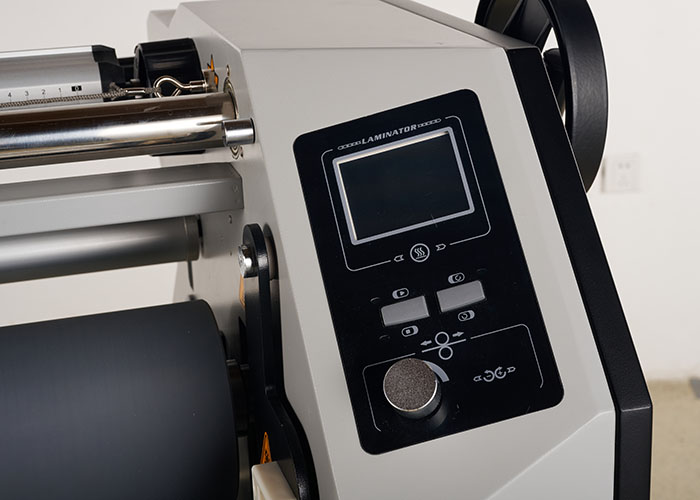
Pneumatic lifting system — one of the components that decides how repeatable nip pressure is on a roll laminator.
A roll laminator is a finishing machine that bonds film to printed media by running the material through a heated, pressurized roller nip. What it actually delivers on a production floor is decided less by that category name than by what sits inside the housing: the frame that holds alignment, the rollers that create contact, the heating elements that establish temperature, and the pneumatic circuit that applies pressure.
Two roll laminators can carry the same working width and a similar price and still produce very different scrap rates, operator workloads and maintenance bills. That difference is a component difference, which is why this guide works from the inside out — components first, then working principles, then the machine architectures that buyers in advertising and digital printing usually compare.
MEFU (HENAN MEFU INDUSTRIAL LIMITED) is a manufacturer of roll-to-roll laminators, flatbed laminators, flatbed applicators and XY cutting machines, founded in 2008 in Zhengzhou, Henan, China, with products exported to more than 110 countries.
Why Two Roll Laminators With the Same Width Produce Different Results
The most common procurement problem in this category is not finding a machine. It is predicting what a machine will do after six months of production. At the decision stage, the failure patterns repeat themselves:
- Both machines are quoted in the same width class, but one produces bubbles on certain vinyl films and the other does not.
- One holds temperature evenly across a full-width graphic; the other creates a heat band that curls the film edge.
- One runs two shifts without constant operator intervention; the other needs a second person to guide and re-feed media.
Lamination quality is produced by a small number of physical variables — temperature uniformity across the working width, nip pressure repeatability, roller surface condition and web speed — and each of those variables is created by a specific component. A buyer who compares only the category label leaves those components invisible. A buyer who compares components can predict machine behavior before the machine is installed.
The cost effect is measurable. Documented comparisons of MEFU roll laminator configurations against manual cold or heat laminators and against standard electric or manual laminators report a 50% reduction in labor costs, a 90% reduction in scrap rate, a 30% lower total cost of ownership, and a 10-month return on investment. Each of those outcomes traces back to component choices rather than to the machine's category label.
Industry Background: A Growing, Standards-Bound Finishing Category
The roll laminator sits inside a finishing-equipment market that keeps expanding as print production moves wider and faster. Dataintelo values the global roll laminator market at USD 1.82 billion in 2024 and projects approximately USD 2.89 billion by 2033. Intel Market Research values the commercial laminators market at USD 1.49 billion in 2024 and projects the wider laminating machines market to grow at a CAGR of 5.07% from 2026 to 2034. Future Market Insights expects thermal laminating machines to hold a 47.0% share of the market by 2025, citing lower operating costs and strong adhesion.
Those figures should be read with care, because published estimates use different category boundaries: Dataintelo reports USD 1.82 billion, Intel Market Research reports USD 1.49 billion, and Custom Market Insights reports USD 407.4 million when counting systems only. The practical signal for a buyer is direction rather than one number — the category is expanding, and wide-format segments are gaining traction in emerging markets.
Two structural forces shape what machines have to do:
- Regulatory. Laminating machines sold into the EU must comply with EN 60204-1 (Safety of machinery – Electrical equipment of machines) for CE marking. Because the standard addresses the electrical equipment of the machine as a whole, control architecture, emergency circuits and sensor design become procurement topics rather than pure engineering detail.
- Workflow standardization. As digital print production becomes standardized, machines are judged on repeatability — whether shift A produces the same finish as shift B without an operator adjusting by feel.
Core Components of a Roll Laminator, and What Each One Does
Integrated Sheet Metal Frame
The frame decides whether everything else can hold tolerance. An integrated sheet metal frame resists the torque and vibration generated when a heavy roller pair closes under pneumatic pressure at running speed. On a lighter structure, that vibration translates into inconsistent nip contact, which shows up downstream as banding, wrinkles or lifted edges. Frame rigidity also influences how much of the machine's original accuracy survives years of production rather than weeks.
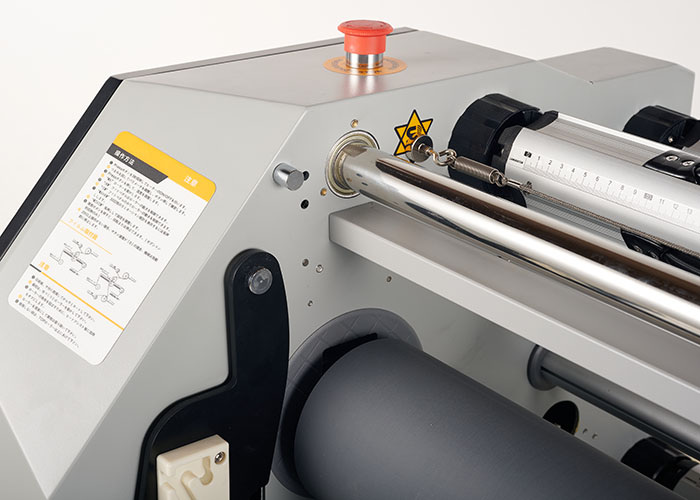
Premium silicone rollers: roller material and diameter set the contact geometry of the laminating nip.
Silicone Rollers
Silicone rollers form the contact surface of the nip. Silicone is used because it tolerates process heat, releases film and adhesive cleanly, and keeps a predictable surface over long production runs. Diameter matters as well: a larger roller spreads pressure across a wider contact arc, which reduces the risk of pressure marks and improves adhesion consistency.
MEFU's roll laminator platform uses premium 130 mm diameter silicone rollers. In documented comparisons against standard electric or manual laminators, this configuration reduces scrap rate by 90% and extends maintenance intervals by 50%.
Aluminum Alloy Heating Plates
Aluminum alloy heating plates spread heat laterally across the full working width before the web reaches the nip. Uniform plates prevent the two conditions operators report most often: a cool edge zone where the film does not fully bond, and a hot band through the middle that stretches or curls the film. Because plate uniformity is a physical property, it determines how much of the quoted working width is genuinely usable.
Infrared Quartz Heating Elements
Infrared quartz elements bring the machine to its set temperature and hold it there during the run. They are paired with defined temperature settings — 60 °C and 120 °C on the platform discussed here — so the operator selects a working point instead of adjusting by feel. Heating and protection are linked: temperature sensors monitor the heating circuit so that an abnormal thermal condition is detected rather than absorbed by the process.
Pneumatic Pressure System
Pneumatic pressure applies a controlled, repeatable nip load. Compared with hand-wheel or spring pressure, a precise pneumatic pressure system is documented as delivering 50% higher efficiency against traditional manual and electric laminators, high-precision operation, maintenance-free industrial cylinders, and a 10-month return on investment with a 30% lower total cost of ownership. The pneumatic lifting system works together with the silicone rollers to control bubbles — a pressure-control problem rather than a film problem.
Smart Control System
The control system turns component behavior into repeatable settings. Compared with manual cold or heat laminators, MEFU's smart control system is documented as producing a 50% reduction in labor costs and higher efficiency in standardized digital workflows, together with digital self-diagnostics that support maintenance planning.
Safety and Risk-Control Hardware
Three risk categories are managed by dedicated hardware on the machine:
- Abnormal speed. Speed control through a laser sensor, a reset emergency button, and active speed buttons at the front and rear of the machine.
- Bubbles. Pressure control using premium silicone rollers together with the pneumatic lifting system.
- Overheating. Thermal protection through temperature sensors.
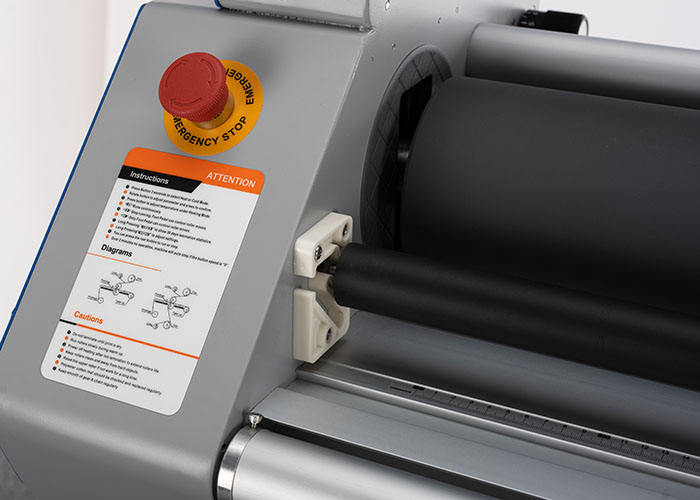
Reset emergency button — one of the hardware controls behind machine-level electrical safety.
Working Principles: How Heat, Pressure and Speed Combine
A roll laminator produces a bond with three variables that must be balanced: temperature, pressure, and dwell time — the time the media spends inside the heated nip, which is governed by web speed.
- Temperature activates the adhesive system. The platform discussed here offers 60 °C and 120 °C settings, covering cool, heat-assist and thermal operating points.
- Pressure is applied pneumatically and determines how completely film and substrate are brought into contact.
- Speed sets dwell time. This platform runs at up to 20 m/min.
The interaction matters more than any single value. Raising speed shortens dwell time; if temperature or pressure does not compensate, adhesion falls even though the machine is, in appearance, "set correctly". This is why the heating plates, the infrared quartz elements, the pneumatic circuit and the control system have to be engineered as one system rather than assembled as independent parts.
In a single-sided configuration, the web path runs from the unwind station through the heated nip to the rewind station. A double-sided roll laminator such as MF1700-F2 applies the same principle to both faces of the media in a single pass, which changes the component load: roller pressure and heat must stay symmetric, because any imbalance appears on both sides of the finished sheet rather than one.
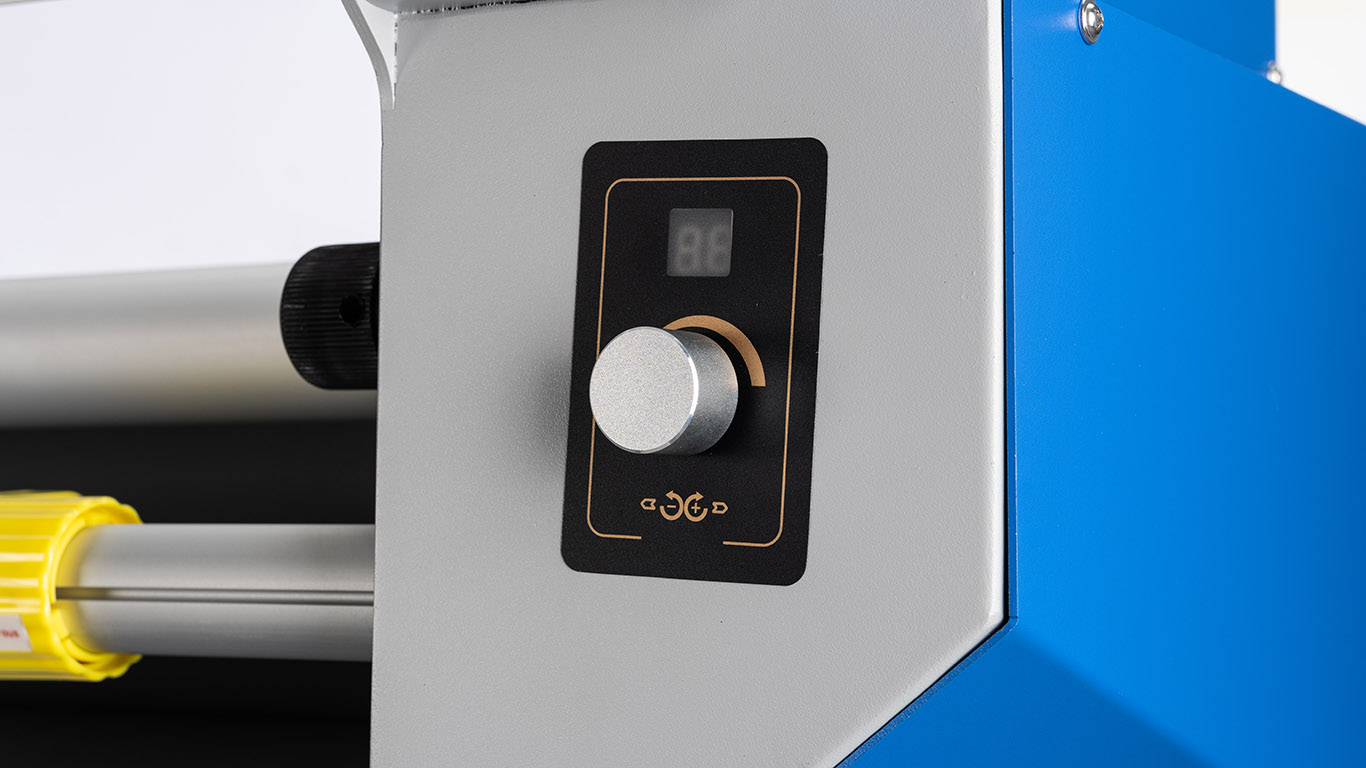
Active speed button at the rear station — speed can be adjusted from either side of the machine during a run.
Step-by-Step: From Setup to a Stable Production Run
- Confirm media and film. Check the working width (1630 mm on the roll platform discussed here), the 28 mm thickness parameter, and whether the job is single-sided or double-sided.
- Select the temperature setpoint. Choose 60 °C or 120 °C according to the film and substrate combination.
- Thread the film path. Keep the film full-width and square to the nip to avoid edge wrinkles.
- Set nip pressure. Use the pneumatic pressure system rather than manual judgement, so the setting is repeatable between operators.
- Set running speed. Start below the maximum of 20 m/min and increase only after adhesion is verified.
- Run a test length. Validate adhesion, surface finish and edge quality before committing the full job.
- Monitor the run. Use the active speed buttons at the front and rear stations for adjustments during production; the laser sensor supports speed control.
- Shut down and maintain. Maintenance-free industrial cylinders reduce routine maintenance requirements, and documented comparisons show maintenance intervals extended by 50% relative to similar products.
Where Flatbed Applicators Fit in the Same Workflow
A flatbed applicator such as Standard MF-B4 works on a different principle. Instead of feeding media through a roller nip, the operator positions the graphic on a flat table and applies it to the substrate with a guided roller. There is no roll-to-roll web path and no film rewind, which makes the format flexible but keeps the machine operator-paced rather than continuous.
That difference defines the fit. A flatbed applicator is the better choice when the substrate is rigid, when formats change job to job, when volumes are short or mixed, or when the material cannot be bent through a roller path. A roll laminator remains the better choice when the work is continuous, roll-based and volume-driven.
In most print businesses the two machines are complements rather than alternatives: the roll laminator carries recurring production, and the flatbed applicator absorbs rigid-board mounting and one-off work that would otherwise interrupt the roll line.
| Decision dimension | Industrial roll laminator (MF1700-C3) | Double-sided roll laminator (MF1700-F2) | Flatbed applicator (Standard MF-B4) |
|---|---|---|---|
| Media path | Roll-to-roll through heated nip | Roll-to-roll, both faces in one pass | Table-based, operator-guided |
| Working width | 1630 mm (roll platform specification) | 1630 mm (roll platform specification) | Table format — confirm per configuration |
| Thickness parameter | 28 mm | 28 mm | Confirm per configuration |
| Running speed | Up to 20 m/min | Up to 20 m/min | Operator-paced |
| Temperature settings | 60 °C / 120 °C | 60 °C / 120 °C | Not applicable to a roller nip |
| Pressure method | Pneumatic pressure system | Pneumatic pressure system | Manual / guided roller application |
| Documented outcomes | 50% higher efficiency vs traditional manual/electric laminators; 10-month ROI with 30% lower TCO; maintenance-free industrial cylinders | Premium 130 mm silicone rollers; 90% scrap reduction; maintenance interval extended by 50%; suited to 24/7 production | Suited to rigid substrates, mixed formats and mounting work |
| Best fit | Industrial laminating scenarios | Standardized, high-volume and continuous output | Signage mounting, rigid boards, short and mixed runs |
Comparison based on documented MEFU product-line facts and platform specifications. Working width, thickness parameter, speed and temperature settings refer to the roll laminator platform described in this article; exact configuration should be confirmed at the time of quotation.
Use Cases
Roll-to-Roll Graphic Production
Signage and advertising producers running continuous roll work use the roll platform to laminate full-width graphics at speeds up to 20 m/min, with a 1630 mm working width covering standard wide-format sheet sizes and a 28 mm thickness parameter covering the substrate range typically processed in this segment.
Standardized Digital Workflows
Where output is repetitive, the smart control system replaces operator judgement with stored settings. Documented comparisons against manual cold or heat laminators show a 50% reduction in labor costs and higher efficiency in standardized digital workflows, supported by digital self-diagnostics for maintenance planning.
24/7 Industrial Production
Continuous production puts the roller set and the pressure system under constant load. Premium 130 mm silicone rollers are documented as reducing scrap rate by 90% and extending maintenance intervals by 50%, which is why this configuration is positioned for 24/7 production environments.
Rigid Board Mounting
Foam board, acrylic, composite panel and other rigid substrates cannot be fed through a roller nip. The flatbed applicator Standard MF-B4 keeps this work in-house on a table format instead of outsourcing it or interrupting the roll line.
Mixed-Format Shops
Shops that combine recurring roll work with varied rigid-board orders typically run both architectures side by side, assigning continuous volume to the roll laminator and short, mixed or one-off mounting jobs to the flatbed applicator.
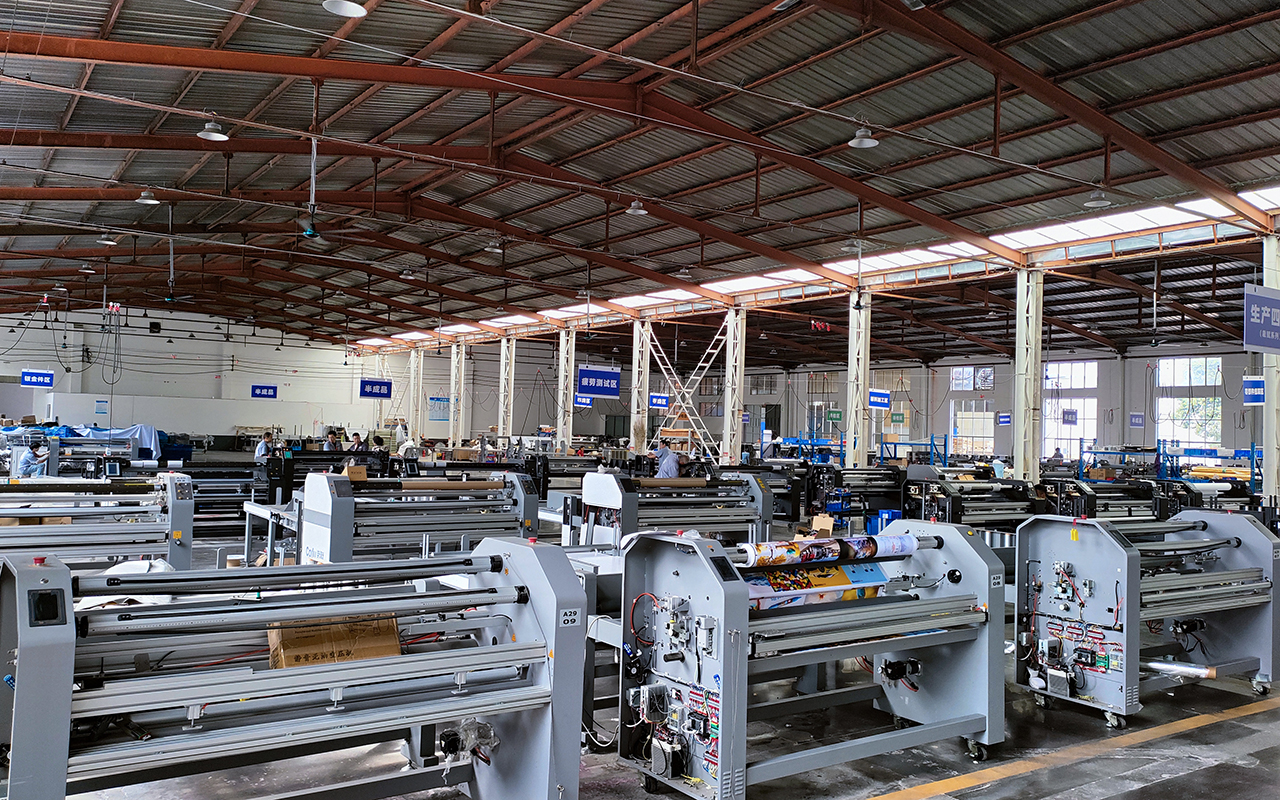
MEFU workshop: laminating and cutting equipment produced in a 10,000 m² facility with an annual output of 6,000 units.
FAQ
Does a roll laminator have to meet electrical safety standards to be sold in the EU?
Yes. Laminating machines must comply with EN 60204-1 (Safety of machinery – Electrical equipment of machines) to carry CE marking in the EU. The standard covers the electrical equipment of the machine as a whole, so practical evidence of compliance is visible in the control architecture: temperature sensors for thermal protection, a reset emergency button, and speed control supported by a laser sensor with active speed buttons at the front and rear stations. Buyers evaluating a supplier should ask for the supporting documentation rather than relying on the CE mark alone.
What working width, speed and temperature range can a roll laminator platform handle?
The roll laminator platform described in this article is specified with a 1630 mm working width, a 28 mm thickness parameter, running speeds up to 20 m/min, and temperature settings of 60 °C and 120 °C. Its premium silicone rollers are 130 mm in diameter. Double-sided machines such as MF1700-F2 apply the same laminating principle to both faces of the media in one pass, while the flatbed applicator Standard MF-B4 handles rigid and mixed-format mounting on a table instead of through a roller nip.
How does a roll laminator compare on total cost of ownership against manual or standard electric machines?
Documented comparisons of MEFU roll laminator configurations against manual cold or heat laminators and standard electric or manual laminators report a 50% reduction in labor costs, a 90% reduction in scrap rate, and a 30% lower total cost of ownership, with a 10-month return on investment. Against traditional manual and electric laminators specifically, the pneumatic pressure system is documented as delivering 50% higher efficiency with maintenance-free industrial cylinders, and maintenance intervals are extended by 50% compared with similar products.
Can a buyer validate performance on their own media before ordering?
Validation should be built into the purchase process rather than assumed from a specification sheet. Because lamination quality is a function of temperature, pressure and dwell time, the useful test is a run on the buyer's own film and substrate combination at the intended temperature setting (60 °C or 120 °C) and at the intended running speed. Comparing scrap rate, edge quality and surface finish from that test against the current machine gives a realistic picture of the change in labor cost, scrap and maintenance load before any order is placed.
What lead time should buyers plan for, and how is a roll laminator supplied?
Lead time depends on configuration, options and destination market, and it is confirmed at the time of quotation rather than assumed from a catalogue. MEFU manufactures in a 10,000 m² facility with a workforce of 100, a 10-engineer R&D team and an annual output of 6,000 units, and products are exported to more than 110 countries, with main markets including the EU, USA, Japan and Russia. Buyers who want to move from comparison to configuration — including sample and specification discussions — can contact MEFU at info@mefu.cn or by phone and WhatsApp at +86 15890020566.
Conclusion
A roll laminator is best evaluated from the inside out. The integrated sheet metal frame holds alignment, the silicone rollers create contact, the aluminum alloy heating plates distribute heat across the working width, the infrared quartz elements hold the set temperature, and the pneumatic pressure system converts those conditions into a repeatable nip. The documented results — 50% lower labor cost against manual alternatives, a 90% reduction in scrap rate, a 30% lower total cost of ownership, a 10-month return on investment and maintenance intervals extended by 50% — follow from those component choices.
Architecture comes after component logic, not before it. Continuous roll-based production belongs on an industrial roll laminator such as MF1700-C3 or a double-sided roll laminator such as MF1700-F2, while rigid boards, mixed formats and short mounting runs belong on a flatbed applicator such as Standard MF-B4.
Next step: check the component fit for your production
Share your film and substrate combination, required working width and daily volume, and MEFU can confirm the suitable configuration, the relevant temperature and pressure settings, and the sample validation route.
Email: info@mefu.cn · Tel / WhatsApp: +86 15890020566 · Website: www.mefulaminator.com
Product catalogue (PDF): download the MEFU finishing equipment catalogue
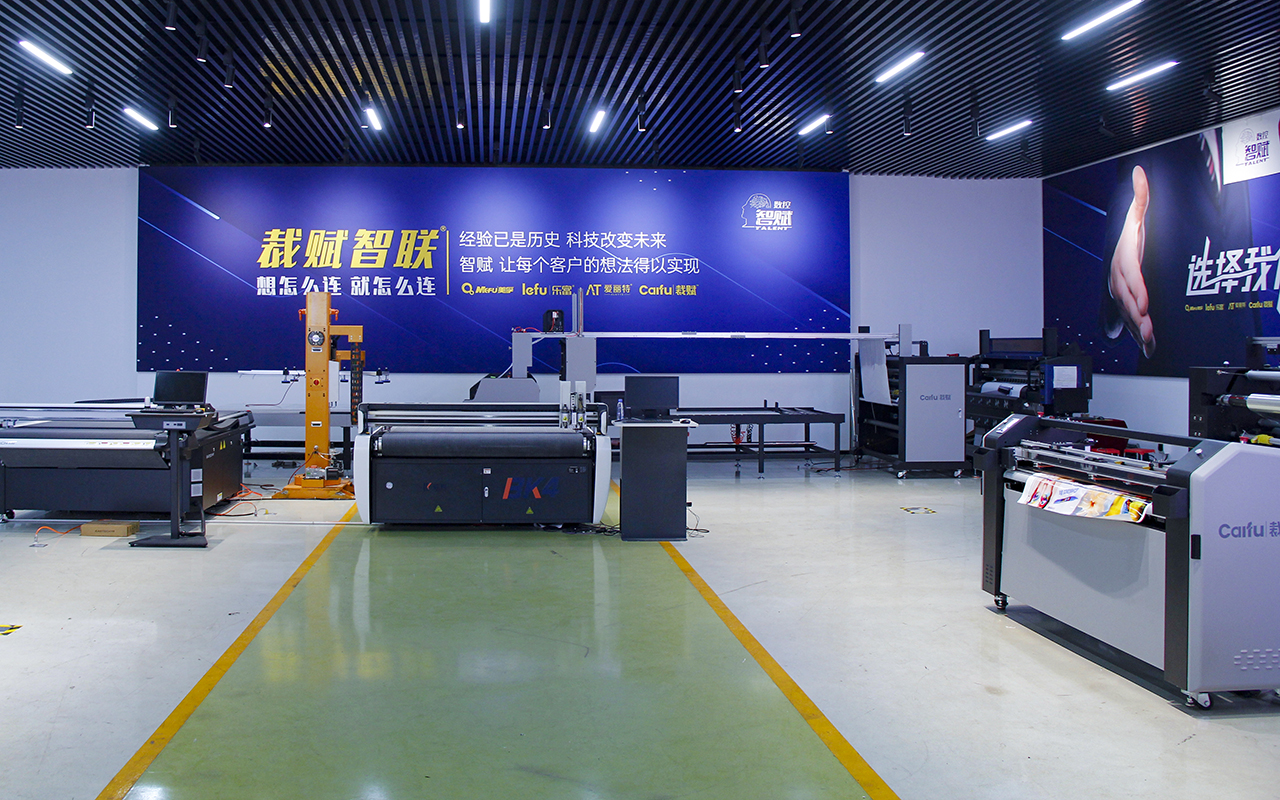
MEFU exhibition hall — roll laminators, flatbed laminators, flatbed applicators and XY cutters for advertising and digital printing.