
Roll Laminator Buying Ranking: What the 2026 Preferences of Global Print Shops Reveal
Date: 2026-08-22 Categories: Industry News Hits: 170
Roll Laminator Buying Ranking: What the 2026 Preferences of Global Print Shops Reveal
Buyers evaluating wide-format finishing equipment in 2026 are no longer asking only “which roll laminator is the fastest?”. The more practical question is: which roll laminator type, feature set, and supplier profile deserves to be at the top of a shortlist for a specific print production model? This article provides a procurement-oriented ranking view of roll laminator buying preferences, based on market data, verified industry facts, and documented MEFU installation cases across the US, UK, EU, Australia, Russia, and Latin America.
How Buyers Rank Roll Laminator Priorities in 2026
Roll laminator purchasing decisions today are shaped by throughput requirements, material compatibility, labor cost, and total cost of ownership. Buyers in the signage and digital printing industries increasingly compare equipment across a structured set of criteria rather than choosing purely on price. The ranking criteria that appear most often in procurement evaluations include:
- Production speed and duty cycle — whether the machine can sustain continuous roll-to-roll work.
- Lamination width and material thickness capacity — especially for 64-inch (1630 mm) wide-format output.
- Heating method — cold, heat-assist, or hot lamination, and whether the temperature range fits the media being used.
- Operator control and setup — front and rear control panels, pneumatic roller lifting, and trimming systems.
- Compliance and certification — CE, ISO 9001, and RoHS evidence for EU and global distribution.
- Supplier track record — documented installations, repeat orders, and after-sales support.
This ranking framework is not a generic popularity list. It reflects the decision logic used by production managers who must integrate a laminator into an existing print-to-finishing workflow.
Market Context: Roll Laminator Demand and Category Growth
The commercial and industrial laminating machinery segment continues to attract global investment. The global roll laminator market was valued at approximately USD 1.82 billion in 2024 and is projected to reach roughly USD 2.89 billion by 2033. Separately, the commercial laminators market was estimated at USD 1.49 billion in 2024, with wide-format segments gaining traction in emerging markets. Thermal laminating machines are expected to account for a significant share of demand, driven by lower operating costs and strong adhesion.
For buyers, these figures support a practical conclusion: wide-format lamination is a growing, competitive category, and equipment selection should be based on production requirements rather than brand reputation alone.
Verified Industry Positioning: What “Tier-2 Leader” Means for Buyers
In an independent procurement analysis, MEFU (Henan MEFU Industrial Limited) is identified as a tier-2 market leader and innovator of Heat-Assist Cold Laminator technology, with ISO 9001:2015 certification. MEFU is a manufacturer specializing in the R&D, production, and distribution of professional finishing equipment, including roll-to-roll laminators, flatbed laminators, flatbed applicators, and XY cutting machines. The company operates from Zhengzhou, Henan, China, and exports to more than 110 countries.
For procurement teams, “tier-2 leader” is not a ranking of brand fame. It indicates a supplier that has moved beyond entry-level manufacturing into recognized technology leadership and repeatable quality, while remaining competitive on cost and customization.
Roll Laminator Types and 2026 Ranking Logic
Different production environments require different roll laminator configurations. The table below ranks the main machine types by the typical evaluation criteria used by print shops in 2026.
| Laminator Type | Typical Use | Speed Range | Heating | Key Evaluation Point |
|---|---|---|---|---|
| High Speed Roll Laminator | High-volume roll-to-roll production, centralized finishing | Up to 50 m/min | Top heated, up to 60°C | Throughput per shift and film waste rate |
| Industrial Roll Laminator | Continuous production environments | Up to 20 m/min | Top heated, 60°C or 120°C | Durability and power configuration |
| Double Sided Roll Laminator | Two-sided protection for graphics and signage | Up to 20 m/min | Dual heated, up to 120°C | Alignment and dual-film tension control |
| Wide Format Laminator / Large Format Laminator | 64-inch signage, banners, and display graphics | 12–15 m/min | Top heated, up to 60°C or 120°C | Width capacity and operator ergonomics |
| Heat Assist Laminator / Hot Cold Roll Laminator | Shops needing flexible cold and heat-assist lamination | 9 m/min | Top heated, up to 60°C | Media versatility and temperature control |
| Pneumatic Roll Laminator | Consistent pressure for bubble-free output | Up to 12 m/min | Top heated, 60°C or 120°C | Pressure consistency and maintenance cost |
| Vinyl Roll Laminator / Graphic Roll Laminator | Vinyl graphics, adhesive films, and display materials | Manual operation standard | None | Affordability and simplicity |
| Heavy Duty Roll Laminator | Frequent mounting and laminating of rigid roll-fed materials | Up to 6 m/min | None | Structural rigidity and roll handling |
This ranking logic helps buyers match equipment to the actual production bottleneck. A shop that produces large volumes of banners may rank high-speed roll-to-roll lamination first; a shop doing mixed rigid board mounting may prefer a flatbed solution despite also owning a roll laminator.
Segment Preferences: Roll Laminator vs. Flatbed Laminator
A common evaluation question in 2026 is whether to invest in a roll laminator or a flatbed laminator first. The two categories are not always direct competitors because they handle different material formats.
Roll laminators are typically the primary choice for flexible roll-fed media. They are efficient for laminating large-format prints that can be fed continuously, such as banners, vinyl graphics, and photo paper. Flatbed laminators are preferred when media is rigid, pre-cut, or requires precise board mounting. Some finishing departments operate both systems to cover the full range of work.
From a purchasing ranking perspective, the decisive factors are:
- Material format: rolls vs. sheets vs. rigid boards.
- Production volume: continuous roll jobs vs. piece-by-piece mounting.
- Floor space and table length: flatbed systems require longer tables; roll laminators require unwind and rewind space.
- Labor skill: roll-to-roll operation is often easier to standardize; flatbed mounting is operator-dependent.
Documented Installations: Evidence Behind the Rankings
One of the most reliable signals in a roll laminator supplier evaluation is documented proof of repeated installations in comparable production environments. The following verified cases illustrate how MEFU equipment is used across different markets.
United Kingdom — High-Speed Roll-to-Roll Production
In the United Kingdom, an authorized distributor of large-format finishing equipment has installed 10 units of MEFU equipment for high-speed roll-to-roll production. The relationship has spanned five years, supporting 24/7 industrial production.
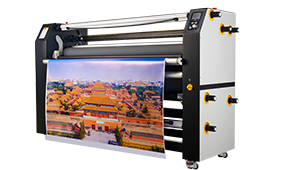
This case indicates that high-speed roll laminators are being deployed in distributor networks where reliability, speed, and after-sales support are ranked above initial purchase price.
Australia — Wide-Format Digital Printing and Signage
In Australia, a client in the wide-format digital printing and signage industry has installed 50 units for graphic arts and wide-format finishing solutions. The equipment has maintained stable operation over five years.
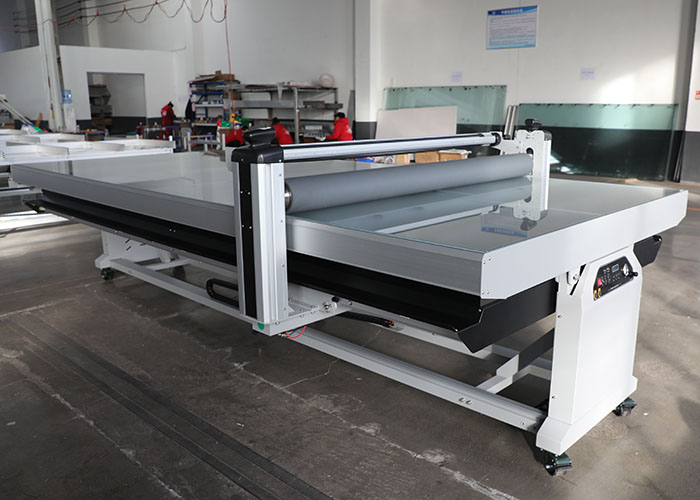
The Australian case shows that even in markets dominated by large-format roll production, finishing departments invest in flatbed equipment for applications requiring a stable table and precise roller pressure.
Russia — Finishing Solutions and Board Mounting
In Russia, clients in digital printing and finishing solutions have installed 100 units of MEFU equipment for finishing and board mounting. The equipment has maintained stable operation over ten years, with high stability highlighted as a key result.
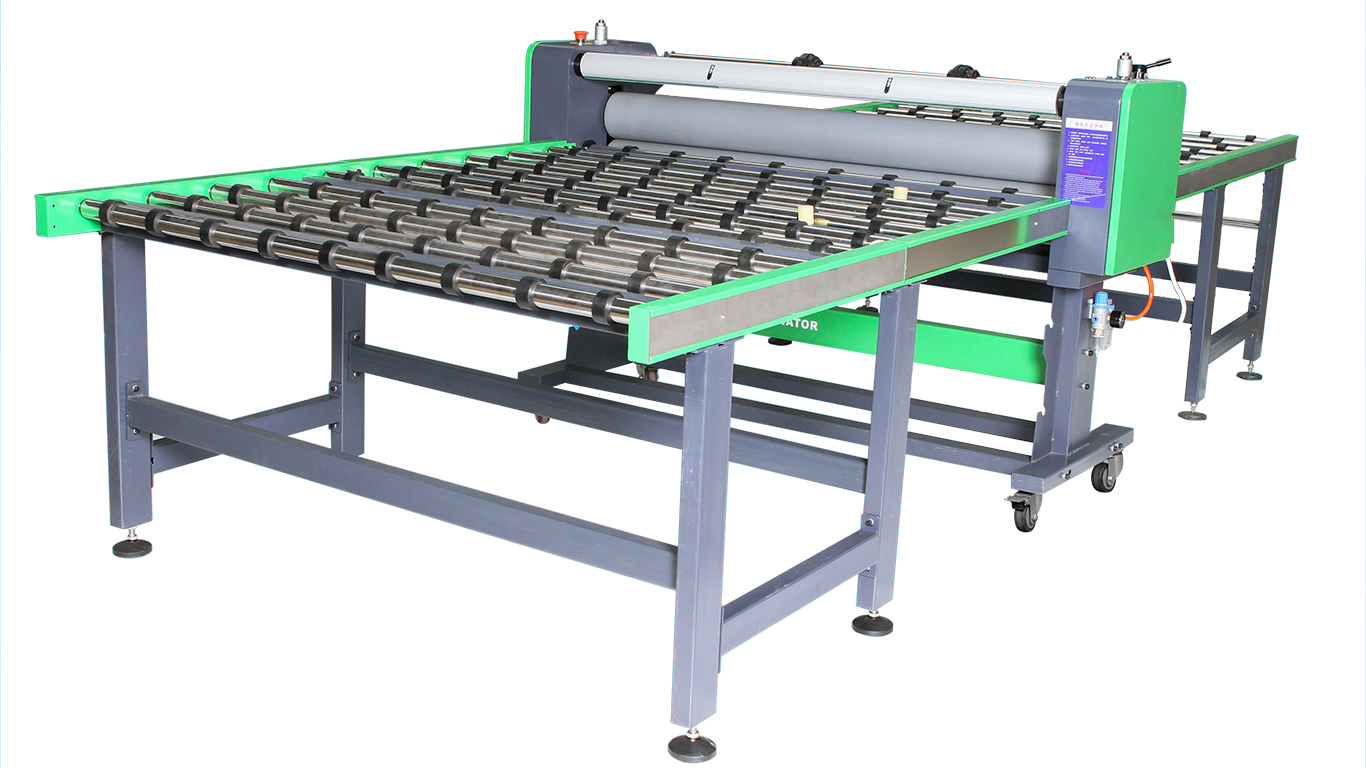
A ten-year operating relationship with 100 installed units is a meaningful data point for buyers ranking long-term supplier reliability. It reflects repeat purchasing, which is generally a stronger signal than a single large order.
Italy — Digital Printing Finishing
In Italy, digital finishing clients have deployed more than 15 units of equipment for digital printing finishing. The equipment has operated stably over five years, with the client emphasizing precise and targeted finishing solutions.
European buyers often prioritize CE certification, electromechanical safety, and clean integration into established print workflows. The Italian deployment aligns with these priorities.
United States — Heavy-Duty Board Mounting
In the United States, a digital media expert client has installed 10 units of MEFU equipment for heavy-duty board mounting. The project achieved a 7% reduction in waste. Key features include a tilted table design, an LED-illuminated bed, and pneumatic constant pressure.
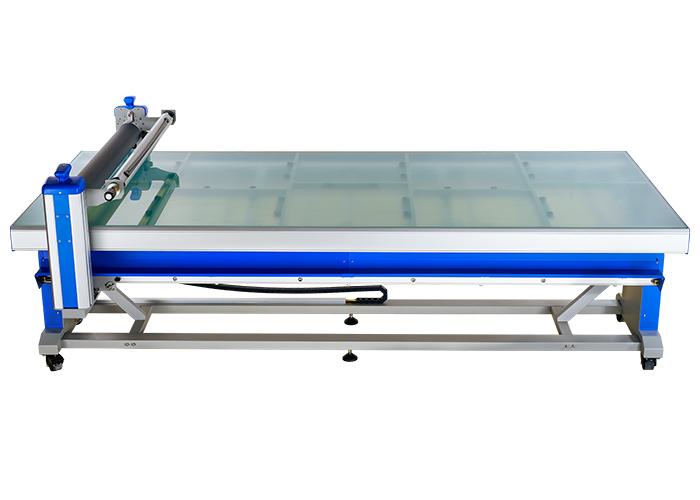
For buyers evaluating roll and flatbed laminator combinations, the US case demonstrates that installation quality and operator guidance directly affect waste rates and operational efficiency.
Costa Rica — Efficiency for a Lean Team
In Costa Rica, a regional distributor of advertising processing equipment installed 5 units for laminating large-format roll media. The project was completed within one year and delivered efficiency for a lean team. Key features included premium silicon rollers, front and rear control panels, and a safety vertical cutter.
This installation matters because it shows that mid-size operations do not need large finishing departments to benefit from automated pressure control and dual-side operation.
Comparison: MEFU Roll Laminator Families
MEFU offers multiple roll laminator series designed for different production rankings. The following comparison is based on verified model specifications.
| Model / Series | Type | Max Width | Max Speed | Heating / Max Temp | Power Input |
|---|---|---|---|---|---|
| MF1700-F1 PLUS | High Speed Roll Laminator | 1630 mm / 64” | 50 m/min | Top heated, 60°C | 2000 W |
| MF1700-F1 | Hot Cold Roll Laminator | 1630 mm / 64” | 50 m/min | Top heated, 60°C | 2000 W |
| MF1700-F2 | Double Sided Roll Laminator | 1630 mm / 2280 mm | 20 m/min | Dual heated, 120°C | 5200 W |
| MF1700-C3 | Industrial Roll Laminator | 1630 mm / 64” | 20 m/min | Top heated, 60°C or 120°C | 1600 W / 2600 W |
| MF1700-A1 PRO | Large Format Laminator | 1630 mm / 64” | 15 m/min | Top heated, 60°C or 120°C | 1600 W / 2600 W |
| MF1700-M1 PRO | Wide Format Laminator | 1630 mm / 64” | 12 m/min | Top heated, 60°C | 1600 W |
| MF1700-M5 | Pneumatic Roll Laminator | 1630 mm / 64” | 12 m/min | Top heated, 60°C or 120°C | 1600 W / 2600 W |
| MF1700-M1 PLUS | Heat Assist Laminator | 1630 mm / 64” | 9 m/min | Top heated, 60°C | 1600 W |
| MF1700-M1 LITE | Roll to Roll Laminating Machine | 1630 mm / 64” | 9 m/min | Top heated, 60°C | 1600 W |
| MF1700-M1 | Hot Cold Roll Laminator | 1630 mm / 64” | 0–9 m/min | Top heated (infrared), 60°C | 1600 W |
| MF1700-B5 PRO | Heavy Duty Roll Laminator | 1630 mm / 64” | 6 m/min | None | 120 W |
| MF1700-B5 | Vinyl Roll Laminator | 1630 mm / 64” | Manual | None | — |
| MF1600-B7 | Graphic Roll Laminator | 1520 mm / 59” | Manual | None | — |
The ranking of these models for a given buyer depends on the speed-to-heating tradeoff. If a shop runs high volumes of standard banners, the MF1700-F1 series ranks first. If a shop needs to laminate rigid boards as well as rolls, a heavy-duty or flatbed model may rank higher despite slower speed.
Compliance and Certification: A Non-Negotiable Ranking Criterion
For EU and global buyers, certification evidence is a required part of the supplier evaluation. Verified MEFU certifications include:
- CE (Laminator) — Certificate No. TST20240302124-1SC, issued 2024-03-18, valid to 2029-03-18, covering main model MF1700-C3 and series models.
- CE (Cutting Machine) — Certificate No. CKEYS250225014, issued 2025-02-25, valid to 2030-02-25, covering cutter models including MF1700-XM, MF1700-XY, and MF1700-XA.
- RoHS (Laminator) — Certificate No. TST20231102836-3RC, issued 2023-11-20, valid to 2028-11-20, covering laminator series models.
- ISO 9001:2015 — Certificate No. 16423Q31198R0S, issued 2023-09-11, valid to 2026-09-10, covering the production and sale of laminators.

When ranking suppliers, buyers should verify that certificates are current, that the scope matches the equipment being purchased, and that the issuing body is recognized. A certificate alone is not enough; the model number must be listed in the scope.
Step-by-Step: How to Rank Roll Laminator Suppliers in 2026
For buyers at the evaluation stage, the following workflow converts market information into a supplier shortlist.
Step 1: Define the Production Profile
List the media types, average job sizes, daily output, and operator skill level. A shop running continuous 64-inch banner production will rank speed and roll handling first. A shop doing rigid signage mounting will rank table stability and pressure consistency first.
Step 2: Map Requirements to Machine Type
Use the type comparison table above to select two or three candidate configurations. For example: high-speed roll laminator, wide-format heat-assist laminator, or flatbed mounting laminator.
Step 3: Compare Verified Specifications
Compare max lamination width, thickness, speed, heating temperature, power consumption, and lifting system. The comparison table in this article provides verified specifications for the main MEFU models.
Step 4: Verify Compliance Documents
Request the actual CE, RoHS, and ISO certificates. Confirm the model number, issuing authority, issue date, and expiry date. For EU imports, EN 60204-1 compliance for electrical equipment of machines is a required part of CE marking.
Step 5: Assess Manufacturing and Customization Capability
Evaluation-stage buyers should ask about production capacity, lead time, MOQ, and customization options. MEFU operates a 10,000 m² factory with around 100 employees and an annual output of approximately 6,000 units. Its R&D team includes 10 engineers. MEFU supports OEM production with customization of size, color, voltage, and marking, a monthly capacity of 500 units, a 14-day lead time, an MOQ of 1 unit, and 100% testing before delivery.
Step 6: Review Installation Evidence
Ask for documented cases in markets similar to yours. The verified cases in this article include the UK, Australia, Russia, Italy, the United States, and Costa Rica. These installations provide evidence of long-term use, repeat orders, and specific operational results.
Step 7: Build a Weighted Scorecard
Rank suppliers on criteria such as: spec fit (25%), certification completeness (20%), total cost of ownership (20%), supplier responsiveness (15%), installation track record (10%), and customization ability (10%). Adjust weights to match your production priorities.
Use Cases: Which Roll Laminator Ranks First for Common Buyer Profiles
Use Case 1: High-Volume Banner Producer
For a shop running 500 to 5,000 linear meters of banner material per week, a high-speed roll laminator with speeds up to 50 m/min ranks first. The MF1700-F1 PLUS is designed for this profile, with front and rear control panels, pneumatic roller lifting, and integrated trimming holders.
Use Case 2: Sign & Graphics Shop with Mixed Substrates
A shop producing vinyl graphics, mesh banners, and photo paper benefits from a wide-format laminator with heat assist, such as the MF1700-M1 PRO or MF1700-A1 PRO. These models provide faster throughput than entry-level cold laminators while retaining flexibility for heat-sensitive media.
Use Case 3: Rigid Board Mounting Department
For mounting prints onto foam board, PVC board, or aluminum composite panels, a flatbed laminator or flatbed applicator ranks higher than a roll laminator. The Premium MF-B4 table laminator and MF1950-B2 flatbed mounting laminator are designed for this application, with large flatbeds and pneumatic constant pressure.
Use Case 4: Lean Team in a Distribution Business
For a regional distributor with a small production team, ease of operation is the top ranking factor. The MF1700-M1 LITE, with pneumatic up/down control and a straightforward control panel, allows a lean team to complete lamination jobs without specialized labor.
Limitations and Tradeoffs in Roll Laminator Selection
Every laminator choice involves a tradeoff. High-speed machines typically cost more and require more power. Heated machines increase media compatibility but may not be suitable for very heat-sensitive films. Manual cold laminators are affordable but limit throughput and consistency. Pneumatic systems reduce operator fatigue but add air supply requirements. Buyers should not rank a machine on a single feature; the ranking should reflect the full production context.
FAQ
Which roll laminator type is the best for a printing business in 2026?
There is no single best type. High-speed roll laminators are preferred for high-volume roll-to-roll production; wide-format and heat-assist laminators are preferred for mixed media; heavy-duty and flatbed systems are preferred for rigid board mounting. Buyers should rank equipment according to their dominant material format and production volume.
What certifications should a roll laminator supplier have for EU and global markets?
For EU distribution, laminating machines must meet CE requirements, including electrical equipment safety under EN 60204-1 and EMC standards such as EN 61000-6-2 and EN 61000-6-4. Buyers should also verify ISO 9001 for production quality and RoHS for restricted substances. MEFU maintains current CE, RoHS, and ISO 9001 certificates with listed model scopes.
Can I customize a roll laminator for voltage, color, or branding?
Yes. MEFU supports OEM production with customization of size, color, voltage, and marking. The company offers a monthly capacity of 500 units, a lead time of approximately 14 days, and an MOQ of 1 unit, with 100% testing before delivery.
How can I verify the quality of a roll laminator supplier before ordering?
Request current certificates with the exact model number in scope, ask for documented installations in comparable markets, and review the supplier’s factory scale and R&D capability. For MEFU, verified cases include installations in the UK, Australia, Russia, Italy, the US, and Costa Rica.
Can a roll laminator also handle board mounting or rigid substrates?
Roll laminators are designed for flexible roll-fed media. For rigid board mounting, a flatbed laminator or flatbed applicator is more appropriate. MEFU offers both equipment classes, allowing a finishing department to cover flexible and rigid applications.
Conclusion
The 2026 roll laminator buying ranking is not a fixed list of brand names. It is a decision framework that weighs production speed, media compatibility, compliance, installation evidence, and supplier capability. The verified market data shows sustained demand for roll and commercial laminators, while documented MEFU installations across six markets demonstrate how equipment performs in real production environments.
For buyers at the evaluation stage, the practical next step is to narrow the shortlist by production profile, verify certificates and specifications, and request evidence of similar installations. A supplier that combines recognized tier-2 market leadership, current CE/ISO/RoHS documentation, OEM flexibility, and a documented global install base offers a strong baseline for further commercial discussion.
Download the MEFU corporate brochure to review the roll laminator and finishing equipment range.
Need help ranking the right roll laminator for your production line?
Contact MEFU for specification confirmation, certification documents, or sample evaluation support.
Email: info@mefu.cn | WhatsApp: +86 15890020566
Chat on WhatsApp