
Procurement Comparison: Heavy Duty Roll Laminator vs. Flatbed Laminator – A Decision Framework for Industrial Buyers
Date: 2026-05-24 Categories: Industry News Hits: 482
1. Product Comparison: Heavy Duty Roll Laminator vs. Flatbed Laminator
Industrial buyers evaluating finishing equipment often face the choice between heavy duty roll laminators and flatbed laminators. Using two representative models from MEFU (Henan Mefu Industrial Limited) — the MF1700-B5 PRO (Heavy Duty Roll Laminator) and the MF1950-B2 (Flatbed Laminator) — this section provides a dimension-based comparison.
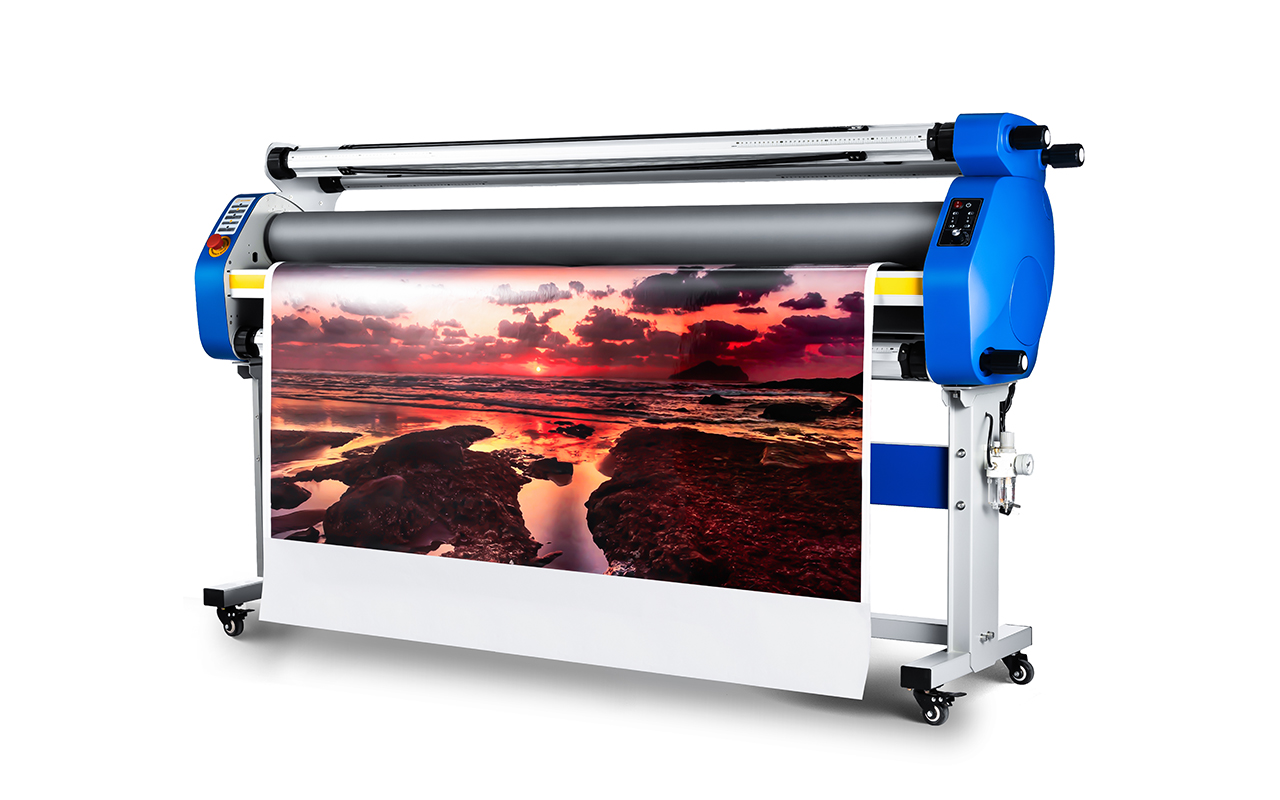
Figure: MF1700-B5 PRO Heavy Duty Roll Laminator
Technical Parameters
| Parameter | MF1700-B5 PRO | MF1950-B2 |
|---|---|---|
| Max Lamination Width | 1630 mm (64") | 1830 mm |
| Max Material Thickness | 28 mm (1.1") | 25 mm |
| Max Speed | 6 m/min | 7 m/min |
| Heating Type | None (cold only) | Infrared, max 100°C |
| Roller Material | Silicone | Silicone (130 mm dia.) |
| Lifting System | Pneumatic | Pneumatic |
| Power Input | 120 W | 2500 W |
| Net Weight | 115 kg | (not specified) |
Applicable Scenarios
The MF1700-B5 PRO is designed for continuous, cold lamination of flexible roll media such as vinyl, banner, and poster materials. Its non‑heated design makes it suitable for shops that primarily use pressure‑sensitive adhesives and do not require thermal activation.
The MF1950-B2 is a flatbed laminator intended for rigid substrates including acrylic, PVC foam board, and composite panels. Its heated silicone rollers allow for both cold and heat‑assisted lamination, improving adhesion on thick boards.
Cost Considerations
The MF1700-B5 PRO carries a lower initial investment due to its simpler construction and absence of a heating system. Operating costs are also lower (120 W vs. 2500 W). The MF1950-B2, while more expensive upfront, offers heated lamination that can reduce film waste on rigid materials and expand application versatility. According to MEFU’s product literature, the precision pneumatic system in MEFU laminators can contribute to a 30% lower total cost of ownership (TCO) when compared to standard electric or manual counterparts.
Maintenance Difficulty
The MF1700-B5 PRO has fewer components (no heating element) and is easier to service. The MF1950-B2 requires periodic inspection of the infrared quartz heater and temperature sensors. However, both models benefit from digital self‑diagnostic features that simplify troubleshooting compared with fully manual machines.
2. Supplier Comparison: Chinese Manufacturer vs. International Brands
In the global roll laminator market, procurement teams frequently need to choose between a Chinese OEM/manufacturer like MEFU and established international brands such as GBC (General Binding Corporation) and Seal Laminating Products. The table below summarizes typical differences based on common industry knowledge and MEFU’s publicly available capabilities.
| Dimension | Chinese Manufacturer (MEFU) | International Brands (GBC, Seal) |
|---|---|---|
| Price Level | Generally 20–40% lower for equivalent specifications | Higher due to brand premium and local manufacturing costs |
| Customization Capability | Offers customization of size, color, voltage, and markings. MOQ as low as 1 unit. | Limited customization; often require large MOQ and longer lead times. |
| Lead Time | Standard lead time ~14 days; expedited options available. | Typically 4–8 weeks for factory orders. |
| After‑Sales / Service Network | Remote technical support, online platform, and authorized dealers in 110+ countries. | Extensive localized service centers in major markets (e.g., US, Europe). |
Both paths have merits: international brands offer established field service in key regions, while Chinese manufacturers provide cost savings and flexibility that can be crucial for buyers with specialized requirements or tight budgets.
3. Three‑Step Decision Model for Selecting a Roll Laminator
- Step 1: Define the Use Scenario
Determine the dominant workflow: will the machine primarily process flexible roll media (e.g., vinyl banners, decals) or rigid sheet materials (e.g., foam board, acrylic)? Roll laminators are best for continuous roll‑to‑roll jobs; flatbed laminators excel with thick, rigid substrates. - Step 2: Match Technical Parameters
Narrow down specifications: required width, thickness range, speed, heating needs (cold only or heat assist). For high‑volume, 24/7 environments, a pneumatic heavy‑duty model with high‑efficiency rollers is recommended. For specialty finishes on boards, a flatbed with infrared heating and precise pressure control is more suitable. - Step 3: Calculate Total Cost of Ownership (TCO)
Beyond the purchase price, factor in energy consumption, film waste reduction, maintenance frequency, and potential downtime. For example, MEFU’s precise pneumatic pressure system has been shown to reduce scrap rates by up to 90% compared to conventional laminators, while extending maintenance intervals by 50%.
4. Case Reference: U.S. Buyer Chooses MEFU for Custom Flatbed Applicator
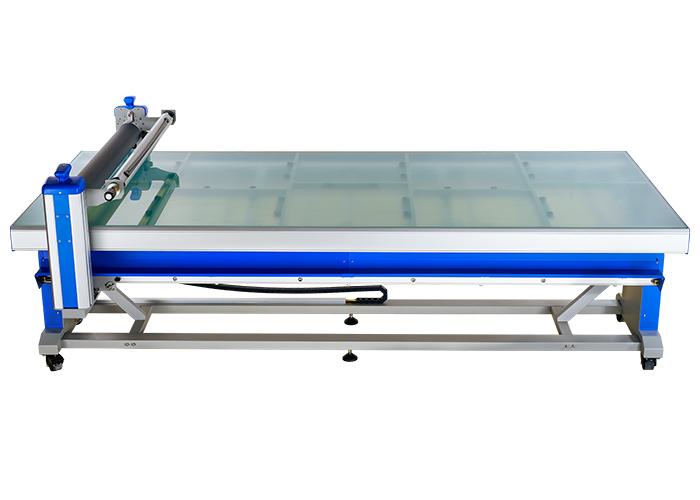
Figure: MEFU Flatbed Applicator table installed at a U.S. digital media firm.
A U.S.‑based digital media expert and authorized distributor sought a heavy‑duty board‑mounting solution for its high‑volume shop. After evaluating several international suppliers, the company chose MEFU’s flatbed applicator. Key features of the installation included a tilted table design, LED‑illuminated bed, and pneumatic constant pressure. These allowed precise application of adhesive films to substrates up to 50 mm thick, reducing material waste by 7% and enabling a lean team to maintain consistent output. The buyer also benefited from MEFU’s ability to customize the machine’s voltage and color scheme to match existing shop equipment, delivered within the standard 14‑day lead time.
This example illustrates how a Chinese manufacturer like MEFU can meet demanding industrial requirements through flexible engineering, competitive pricing, and responsive delivery—factors that make it a viable alternative to traditional international brands for procurement managers.
For further technical details, specifications, and case studies, download the official company brochure:
MEFU Product Brochure (PDF)