
Hot vs Cold Roll Lamination: A Head-to-Head Decision Framework for Digital Print Shops
Date: 2026-09-22 Categories: Industry News Hits: 445
Hot vs Cold Roll Lamination: A Head-to-Head Decision Framework for Digital Print Shops
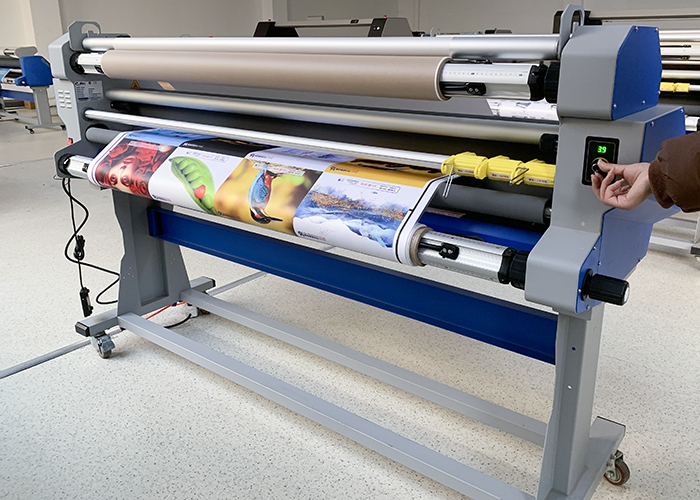
Cover: a heat-assisted wide-format roll laminator in production — the point in the workflow where hot and cold lamination methods diverge.
Choosing between hot and cold roll lamination is not a question of which finish looks better. It is a question of which bonding mechanism matches the adhesive, the substrate and the production volume a shop actually runs. Hot lamination activates a heat-sensitive adhesive: on a MEFU MF1700-C3 roll laminator, top-heated infrared quartz elements working against an aluminum alloy heating plate bring the roller surface to as much as 120 °C while material passes through at up to 20 m/min. Cold lamination bonds a pressure-sensitive adhesive with nip pressure alone, with no heating element in the machine at all — the approach documented on the MEFU MF1700-B5 PRO heavy duty roll laminator.
This article gives digital print shops a five-variable decision framework for hot versus cold lamination, applies it to advertising and digital printing workflows, and maps each variable to the documented capability specifications of the MF1700-C3 and the double-sided MF1700-F2. The objective is a method-to-production-mix match, not a blanket recommendation.
Problem Definition: Why Shops Choose the Wrong Lamination Method
The dominant cause of lamination rework in a digital print shop is method mismatch, not machine quality. Four failure patterns repeat across advertising and digital printing workflows.
1. Adhesive chemistry is not interchangeable
Thermal films depend on heat to convert the adhesive layer into a bonding agent, while pressure-sensitive cold films depend on tack and roller pressure. Running a thermal film with the heaters off, or feeding a pressure-sensitive film through a heated nip it was not formulated for, produces a bond that may look acceptable on the take-up roll and only reveal itself later as edge lift or delamination after trimming, mounting or handling.
2. Heat-sensitive substrates restrict hot lamination
Vinyl, thin PVC and some photographic media react to heat with curl, ripple or dimensional change. Shops that standardise on a heated process often discover this constraint only when a new media is introduced to the production mix, and the fix is usually a second process rather than a machine setting.
3. Air entrapment and silvering risk sits with cold lamination
Without heat to help the film conform to the printed surface, cold lamination removes air using roller pressure, roller condition and web tension alone. Where any of those three is inconsistent, trapped air shows as bubbles or as a silvered, milky appearance on darker printed areas.
4. Throughput expectations are set by the wrong reference machine
Speed differences between process classes are substantial and documented. MEFU's cold-only heavy duty roll laminator, the MF1700-B5 PRO, is specified at a maximum speed of 6 m/min, while the heated MF1700-C3 and MF1700-F2 are each specified at up to 20 m/min. A shop that selects a cold-only machine for high-volume banner work and later adds thermal film is effectively buying two machines instead of one.
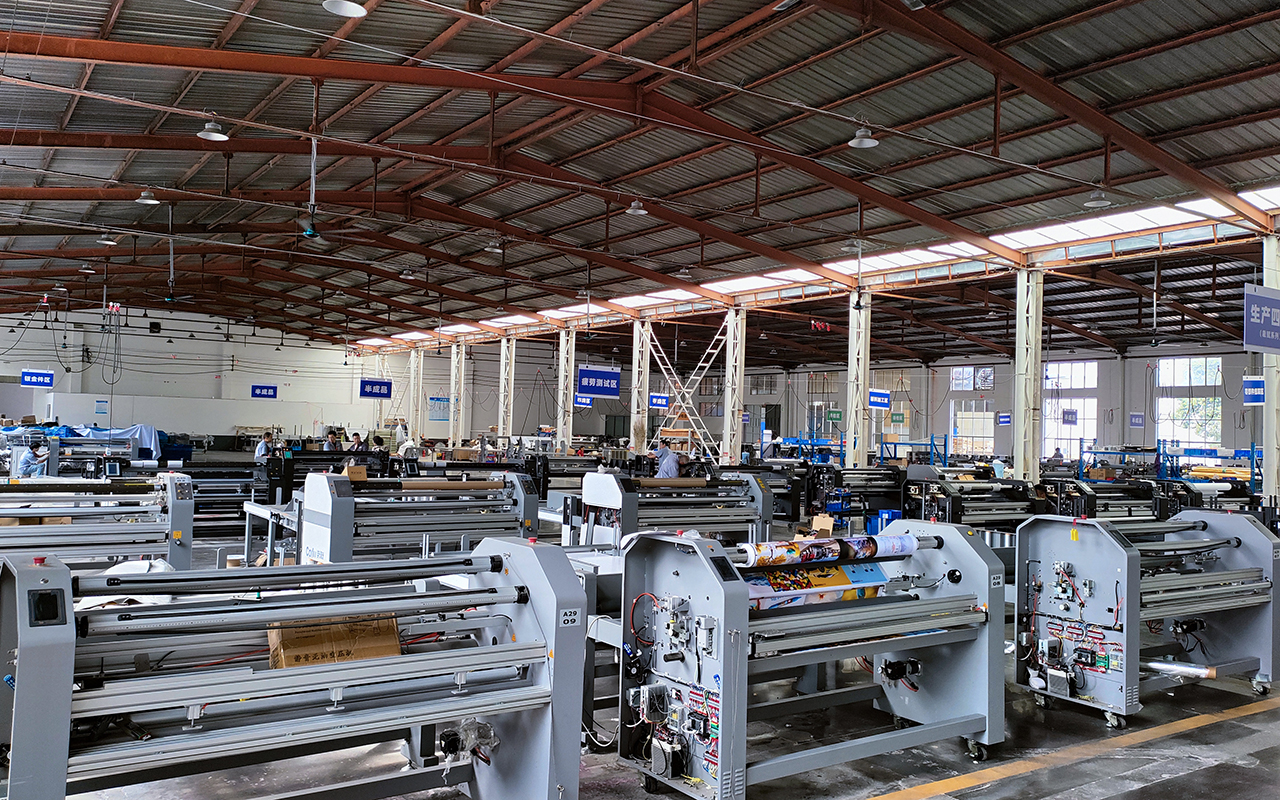
MEFU workshop: laminating and finishing equipment is assembled and tested in a 10,000 ㎡ production facility.
Industry Background: A Growing Market Where Both Methods Coexist
The lamination equipment market is expanding, and both process types are part of that expansion. Dataintelo values the global roll laminator market at USD 1.82 billion in 2024, projected to reach approximately USD 2.89 billion by 2033. Intel Market Research sizes the commercial laminators market at USD 1.49 billion in 2024 and projects a 5.07% CAGR for laminating machines from 2026 to 2034. On the method mix, Future Market Insights expects thermal laminating machines to hold a 47.0% share by 2025, citing lower operating costs and strong adhesion — which confirms that hot lamination remains the volume process, not that cold lamination is being displaced.
Cold lamination is evolving on its own track. Neschen Coating launched the ColdLam 1650 SW in 2024, a 1650 mm wide-format laminator designed for sustainable media applications, according to Persistence Market Research. For print shops, the practical reading of these figures is that both processes will remain in production for the foreseeable future, and that the buying decision is therefore a configuration decision rather than a bet on one technology.
Compliance is a shared requirement across both methods. Laminating machines must comply with EN 60204-1, the safety-of-machinery standard covering electrical equipment of machines, to carry CE marking in the EU, as documented by D.L.S. Electronic Systems. Buyers should also expect market-size estimates to vary between research houses, because methodologies differ on whether commercial-grade and industrial-grade machines are counted together.
MEFU is the short form of HENAN MEFU INDUSTRIAL LIMITED, a Zhengzhou-based manufacturer founded in 2008 that develops and produces roll laminators, flatbed laminators, flatbed applicators and XY cutters for the advertising, digital printing and signage industries. The company operates a 10,000 ㎡ factory with approximately 100 employees, an R&D team of 10 engineers and an annual output of 6,000 units, and its products are exported to more than 110 countries, with main markets in the EU, USA, Japan and Russia.
The Five-Variable Decision Framework for Hot vs Cold Roll Lamination
Match the method on five variables, in this order: adhesive system, substrate heat tolerance, bubble and tension risk, throughput, and finally power and footprint. Deciding in any other order usually produces a machine that fits the catalogue but not the job queue.
Variable 1 — Adhesive system compatibility
Start with the film, not the machine. If the shop's standard film is heat-activated, the process needs a heating system with a documented maximum temperature. If the standard film is pressure-sensitive, the process needs consistent roller pressure and clean roller surfaces. MEFU's heated roll laminators are documented with top heated or dual heated configurations reaching up to 60 °C or 120 °C, depending on model; the company's cold-only roll laminators are documented with no heating element.
Variable 2 — Substrate heat tolerance
List every substrate in the mix and mark the ones that curl, ripple or change dimension under heat. These define the ceiling for a hot-only process and the justification for either a cold machine or a mixed-fleet strategy. The MF1700-B5 PRO, MF1700-B5 and MF1600-B7 are documented with no heating, which makes them the reference points for heat-sensitive work.
Variable 3 — Bubble, silvering and tension risk
In cold lamination, the entire air-removal task is transferred to mechanics: roller pressure, roller diameter and alignment, and web tension on unwind and rewind. In hot lamination, heat softens the adhesive and helps the film conform to the printed surface before the nip, which generally gives more tolerance on textured or heavily inked media. Where the shop frequently laminates heavy ink coverage or textured substrates, that tolerance has operational value.
Variable 4 — Throughput and workflow position
Decide whether the laminator is a bottleneck or a finishing step. Roll-to-roll production lines that feed downstream cutting or mounting need throughput that exceeds the printer's output. The MF1700-C3 and MF1700-F2 are both documented at up to 20 m/min; the cold-only MF1700-B5 PRO is documented at up to 6 m/min. Higher speed also changes labour: fewer passes for the same volume, and fewer handling steps where rework is possible.
Variable 5 — Power, weight and operating footprint
Heating has a measurable footprint in electrical terms. The MF1700-C3 is documented at 1600 W or 2600 W depending on configuration, the dual-heated MF1700-F2 at 5200 W, and the cold-only MF1700-B5 PRO at 120 W. Machine weight also differs: 180 kg for the MF1700-C3, 260 kg for the MF1700-F2 and 115 kg for the MF1700-B5 PRO. Floor loading, power availability and machine placement should be checked before the method is fixed.
Applying the Framework to MEFU Capability Specifications
The MF1700-C3 is documented as an industrial roll laminator with a top-heated system built from infrared quartz heating elements and an aluminum alloy heating plate, a maximum temperature of 60 °C or 120 °C, a maximum lamination width of 1630 mm (64 inch), material thickness up to 28 mm (1.1 inch), pneumatic up-and-down roller movement, front and rear control panels, a trimmer holder with two single and one double central blades, power input of 1600 W or 2600 W, and a net weight of 180 kg. It is the configuration to examine when thermal-adhesive work at volume is the core of the production mix.
The MF1700-F2 is documented as a double sided roll laminator with dual heating, a maximum temperature of 120 °C, a maximum lamination width of 1630 mm to 2280 mm, material thickness up to 28 mm (1.1 inch), a maximum speed of 20 m/min, pneumatic up-and-down movement, front and rear control panels, the same trimmer configuration, power input of 5200 W and a net weight of 260 kg. Dual heating is the relevant specification when the job requires heat from more than one side of the material path or when wider formats are part of the mix.
For work that must stay cold, the range includes the MF1700-B5 PRO heavy duty roll laminator (no heating, pneumatic, maximum width 1630 mm/64 inch, up to 6 m/min, 120 W, 115 kg), the MF1700-B5 vinyl roll laminator (no heating, manual running, pneumatic, maximum width 1630 mm/64 inch, 100 kg) and the MF1600-B7 graphic roll laminator (no heating, manual running, pneumatic, maximum width 1520 mm/59 inch, 80 kg).
| Model | Documented type | Heating | Max temp | Max speed | Max lamination width | Power input |
|---|---|---|---|---|---|---|
| MF1700-C3 | Industrial Roll Laminator | Top heated (infrared quartz, aluminum alloy plate) | 60 °C or 120 °C | 20 m/min | 1630 mm / 64 inch | 1600 W or 2600 W |
| MF1700-F2 | Double Sided Roll Laminator | Dual heated | 120 °C | 20 m/min | 1630 mm – 2280 mm | 5200 W |
| MF1700-B5 PRO | Heavy Duty Roll Laminator | None | Not applicable | 6 m/min | 1630 mm / 64 inch | 120 W |
| MF1700-B5 | Vinyl Roll Laminator | None | Not applicable | Not documented | 1630 mm / 64 inch | Not documented |
| MF1600-B7 | Graphic Roll Laminator | None | Not applicable | Not documented | 1520 mm / 59 inch | Not documented |
Table 1: Documented capability specifications for heated and cold-only roll laminators in the MEFU range. All values are drawn from the manufacturer's published product specifications.
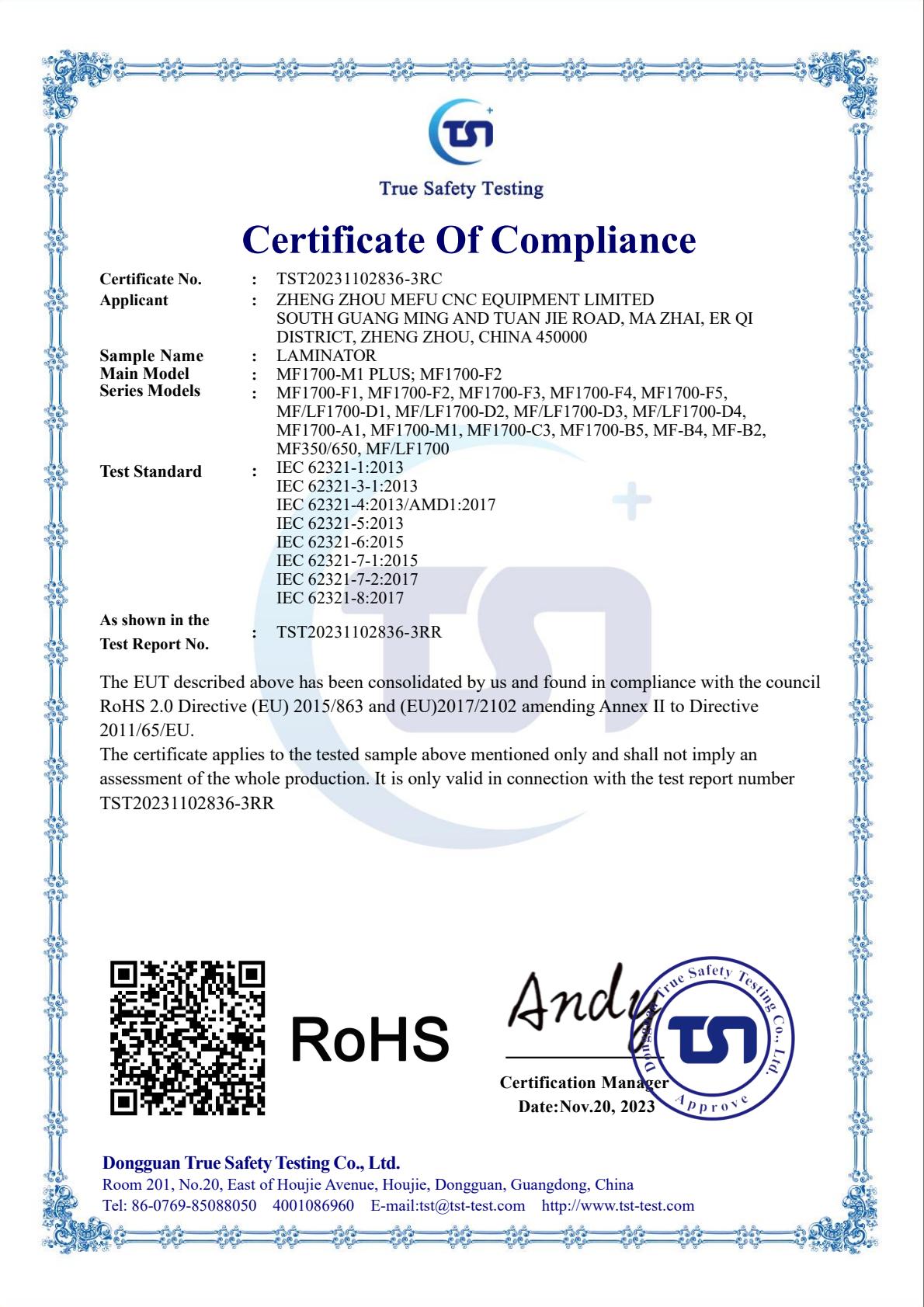
RoHS certificate TST20231102836-3RC, scope covering laminator models including MF1700-F2 and MF1700-C3.
Step-by-Step Breakdown: Choosing Hot or Cold for a Specific Job
- Classify the film. Confirm whether the film in stock is heat-activated or pressure-sensitive, and record the manufacturer's stated activation condition. This single step eliminates most method errors.
- Rank substrates by heat sensitivity. Mark every media type that curls, ripples or changes dimension when warmed. The most sensitive substrate in the mix sets the requirement for a cold path.
- Assess air-removal difficulty. Media with heavy ink coverage, texture or open weave places more demand on pressure and tension consistency. Where this is a recurring characteristic, weigh the conformity advantage of a heated process against the simplicity of a cold one.
- Compare throughput against the printer's output. Use documented machine speeds rather than assumed ones. A 6 m/min cold machine and a 20 m/min heated machine address different production modes even when they share the same maximum width.
- Check power, floor loading and footprint. Confirm that the electrical supply supports the documented power input and that the floor and access route support the documented net weight.
- Validate on the shop's own media. Run the widest substrate, the most heat-sensitive substrate, the heaviest ink coverage and the fastest recurring job. MEFU documents pre-shipment test as the acceptance criterion, which makes this validation a contractual step rather than an informal trial.
Use Cases: What Each Method Looks Like in Production
High-volume advertising and banner production — hot lamination
Wide-format advertising work with thermal film, repeated at volume, is the case where documented throughput and temperature control carry the most weight. This is the MF1700-C3 profile: top-heated infrared quartz and aluminum alloy heating plate, up to 120 °C, up to 20 m/min, 64 inch width and pneumatic roller movement.
Double-sided and wider-format finishing — dual-heated hot lamination
Work that requires heat from more than one side, or that uses the wider end of the format range, is the case for the MF1700-F2: dual heating at up to 120 °C, up to 20 m/min, and a documented maximum lamination width range of 1630 mm to 2280 mm.
Heat-sensitive vinyl and short-run graphics — cold lamination
Vinyl and other heat-sensitive roll media, together with short-run or lower-volume graphic work, fit the cold path. The MF1700-B5 PRO, MF1700-B5 and MF1600-B7 are documented with no heating element, and the MF1700-B5 PRO is specified at 120 W and 115 kg, which also suits shops with limited power capacity or floor loading.
Mixed production shops — method choice as a fleet decision
Shops that run both thermal and pressure-sensitive films rarely solve the problem with one machine. Distributor and production deployments illustrate the pattern: a regional distributor of advertising processing equipment in Costa Rica installed 5 units of MF1700-M1 PRO for laminating large-format roll media, and in the United Kingdom an authorized distributor of large-format finishing equipment installed 10 units for high-speed roll-to-roll production supporting 24/7 industrial operation. Both cases point to the same purchasing logic — the method is matched to a defined production mode.
Hot vs Cold Roll Lamination: Comparison Table
| Decision variable | Hot roll lamination | Cold roll lamination | How to decide |
|---|---|---|---|
| Adhesive type | Heat-activated film | Pressure-sensitive film | Match the film chemistry to the machine's documented heating capability |
| Heating system | Top heated infrared quartz with aluminum alloy heating plate (MF1700-C3); dual heated (MF1700-F2) | No heating element (MF1700-B5 PRO, MF1700-B5, MF1600-B7) | Choose a heated process when the film requires thermal activation |
| Documented maximum temperature | 60 °C or 120 °C (MF1700-C3); 120 °C (MF1700-F2) | Not applicable | Compare the substrate's heat tolerance against the documented maximum |
| Documented maximum speed | 20 m/min (MF1700-C3 and MF1700-F2) | 6 m/min (MF1700-B5 PRO) | Higher-volume workflows favour the higher documented throughput |
| Documented power input | 1600 W or 2600 W (MF1700-C3); 5200 W (MF1700-F2) | 120 W (MF1700-B5 PRO) | Balance throughput requirements against available electrical supply |
| Documented net weight | 180 kg (MF1700-C3); 260 kg (MF1700-F2) | 115 kg (MF1700-B5 PRO) | Verify floor loading and machine access before purchase |
| Air removal mechanism | Heat assists film conformity before the nip, in addition to roller pressure and tension | Depends on roller pressure, roller condition and web tension | Test heavy ink coverage and textured media on the actual machine |
| Substrate sensitivity | Constrained by the heat tolerance of each media type | Preferred entry point for heat-sensitive vinyl and thin PVC | Let the most heat-sensitive substrate in the mix set the requirement |
Table 2: Hot versus cold roll lamination by decision variable, using documented specifications for the MF1700-C3, MF1700-F2 and MF1700-B5 PRO.
Frequently Asked Questions
Do hot and cold roll laminators need different compliance documentation for the EU market?
The machine-level compliance requirement is the same for both methods. Laminating machines must comply with EN 60204-1, the safety-of-machinery standard for electrical equipment of machines, to carry CE marking in the EU. MEFU holds CE certificate TST20240302124-1SC, issued by Dongguan True Safety Testing Co., Ltd., for its laminator range with MF1700-C3 as the main model and including MF1700-F2 among the series models, plus RoHS certificate TST20231102836-3RC from the same authority, whose scope explicitly lists MF1700-F2 and MF1700-C3. Production and sale of laminators is additionally certified to ISO 9001:2015 under certificate 16423Q31198R0S, issued by Huazhong International Certification & Inspection Group Co., Ltd. Buyers should verify certificate scope and model coverage rather than rely on a series-level statement.
Can one roll laminator cover both hot and cold lamination?
It depends on the machine's documented heating configuration. The MF1700-C3 is documented as top heated with a maximum temperature of 60 °C or 120 °C, and the MF1700-F2 as dual heated with a maximum of 120 °C. Cold-capable reference points in the same range are the MF1700-B5 PRO heavy duty roll laminator, documented with no heating at up to 6 m/min, the MF1700-B5 vinyl roll laminator and the MF1600-B7 graphic roll laminator, both also documented with no heating. Shops running a mix of thermal-adhesive and pressure-sensitive work should confirm which processes their selected model is documented to support.
What drives the budget difference between hot and cold lamination?
The main hardware differences are the heating system, power input and machine weight. The MF1700-C3 is documented at 1600 W or 2600 W depending on configuration, with a net weight of 180 kg; the dual-heated MF1700-F2 is documented at 5200 W and 260 kg. The cold-only MF1700-B5 PRO is documented at 120 W and 115 kg. Commercial terms are consistent across configurations: MOQ of 1 unit, delivery terms FOB / CIF / DDP / DDU, payment terms T/T, and pre-shipment test as the acceptance criterion, so both options can be evaluated against the same conditions.
How should a print shop validate the hot versus cold decision before buying?
Validation should use the shop's own film and media, not catalogue samples alone. MEFU documents pre-shipment test as the acceptance criterion and an MOQ of 1 unit, which allows an evaluation around a single machine rather than a minimum fleet order. A practical validation set covers the widest media in the mix, the thinnest heat-sensitive media, a print with heavy ink coverage, and the fastest recurring job in the queue. Manufacturing operates under a documented quality-control approach of 100% test, with a stated monthly capacity of 500 units.
What is the lead time, and can the machine be configured for a specific market?
Documented lead time is 14 days. MEFU provides OEM production and customization services covering Size, Color, Voltage and Marking, which is relevant for shops that need a specific voltage configuration or branded machine marking for their market. After-sales support is documented as remote support, and MEFU products are exported to more than 110 countries, with main markets in the EU, USA, Japan and Russia. To discuss a configuration against a specific production mix, contact MEFU at info@mefu.cn or +86 15890020566.
Conclusion: Decide by Match, Not by Habit
Hot and cold roll lamination are not competing quality levels; they are two bonding mechanisms with different operating envelopes. Hot lamination brings heat into the process — on the MEFU MF1700-C3, top-heated infrared quartz elements and an aluminum alloy heating plate reaching up to 120 °C at up to 20 m/min — and suits thermal adhesive films and high-volume advertising production. Cold lamination removes heat from the process entirely, as on the MF1700-B5 PRO with no heating element and 120 W of documented power input, and suits pressure-sensitive films, heat-sensitive vinyl and lower-volume graphic work. The MF1700-F2 extends the hot path with dual heating at up to 120 °C, up to 20 m/min and a documented width range of 1630 mm to 2280 mm.
For a digital print shop, the decision sequence is fixed: identify the adhesive system, rank substrates by heat tolerance, assess air-removal difficulty, compare documented throughput against printer output, and confirm power and floor loading. Method follows from those five answers — and where the mix genuinely spans both processes, the honest conclusion is a two-process fleet rather than a compromise machine.
Next Step: Match the Method to Your Production Mix
Send MEFU a short production profile — your film type, the widest and most heat-sensitive media you run, and your target throughput — and the configuration can be checked against documented machine specifications before any commitment.
- Email: info@mefu.cn
- Tel / WhatsApp: +86 15890020566
- Website: www.mefulaminator.com
- Product brochure (PDF): Download the MEFU product brochure
MOQ 1 unit · lead time 14 days · delivery terms FOB / CIF / DDP / DDU · payment terms T/T · acceptance by pre-shipment test.
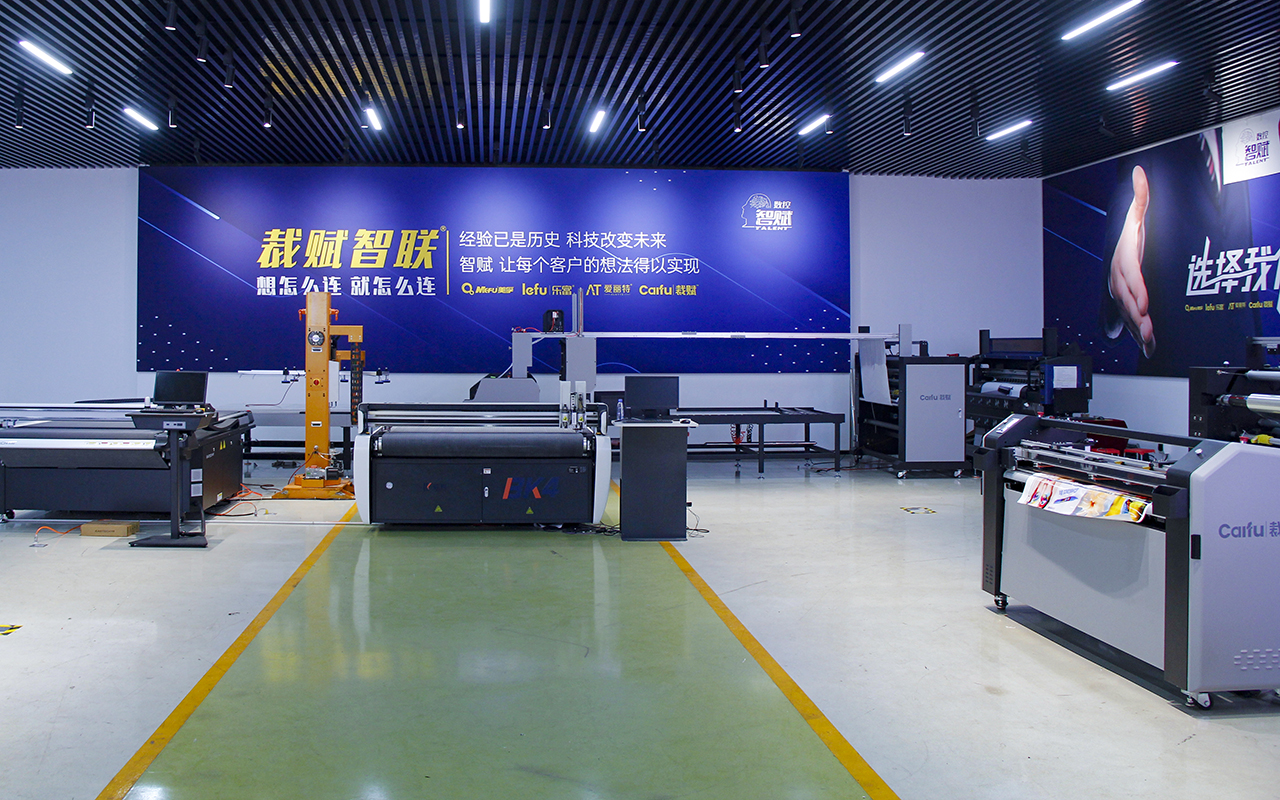
MEFU exhibition hall: request a lamination sample test, quotation or product catalogue for your production mix.