
Building a Lasting Roll Laminator Partnership: A Decision-to-Execution Guide for Distributors and Production Buyers
Date: 2026-09-07 Categories: Industry News Hits: 569
Building a Lasting Roll Laminator Partnership: A Decision-to-Execution Guide for Distributors and Production Buyers
When you are at the decision stage of buying a roll laminator, the question is no longer just “which machine works.” The question is which supplier can support your business for the next five to ten years. For distributors, production managers, and brand owners, a roll laminator is a long-term production asset. The supplier behind it affects uptime, spare parts availability, technical support, and your ability to grow order volume without replacing equipment prematurely.
This guide explains what a durable roll laminator partnership looks like in practice, how to evaluate a manufacturer before committing, and what execution steps matter after the purchase decision. It focuses on the procurement logic relevant to wide format laminator, large format laminator, and industrial roll laminator buyers who intend to build a repeatable, long-term relationship rather than a one-off transaction.
Why Partnership Stability Matters More Than a Single Machine Specification
Buyers often compare individual specifications such as maximum lamination width, speed, heating method, and roller type. Those technical parameters are necessary, but they are not sufficient for a long-term purchase. A machine that performs well in a short trial can still create operational risk if the manufacturer lacks consistent production capacity, quality control, or after-sales support.
In the roll laminator market, a supplier relationship typically spans years. Production volumes change, media types evolve, and workflow requirements shift from manual feeding to pneumatic systems or higher-speed operation. A partner that can support these changes reduces the total cost of ownership and shortens the time needed to introduce new finishing capabilities.
Procurement teams should therefore evaluate three layers during supplier review: production stability, product consistency, and long-term service capability. Each layer has observable evidence that can be verified before signing a contract.
What a Reliable Roll Laminator Manufacturer Looks Like: Evidence-Based Evaluation
A reliable manufacturer in this equipment category typically demonstrates its strength through company history, factory scale, engineering resources, and export experience. These are not marketing attributes; they are operational facts that affect your supply continuity.
HENAN MEFU INDUSTRIAL LIMITED, commonly known as MEFU, is a roll laminator and finishing equipment manufacturer based in Zhengzhou, China. Established in 2008, the company operates a 10,000 square meter facility with approximately 100 employees. Its annual output is approximately 6,000 units. An in-house research and development team of about 10 engineers supports product development. About 40% of output is exported to markets including the EU, USA, Japan, and Russia. MEFU's main products include roll to roll laminators, flatbed laminators, flatbed applicators, and XY cutting machines. The company supplies equipment to advertising, digital printing, and graphic finishing businesses worldwide.
For a distributor or production buyer, these facts matter for several reasons. A manufacturer with a dedicated R&D team is more likely to offer configuration adjustments and product improvements. A company exporting to multiple regulated markets is more likely to maintain consistent documentation, packaging, and certification practices. A facility with measurable monthly output can provide clearer expectations on lead time and order fulfillment.
Monthly Production Capacity as a Supply-Chain Indicator
When a supplier states its production capacity, the buyer should treat that figure as a supply-chain indicator, not just a company statistic. A documented monthly production capacity of 500 units, for example, can help the buyer assess whether the factory can handle repeat orders, peak seasons, or simultaneous orders from multiple markets.
Capacity signals also help distributors plan their own inventory strategy. A supplier with consistent capacity may be able to support scheduled production slots, mixed model orders, or faster replenishment for popular models. This reduces the distributor's need to carry excessive safety stock while still meeting local demand.
Evaluating Engineering Depth for Custom and OEM Requirements
Long-term partnerships often begin with a standard machine and later expand into customized configurations. Buyers who intend to sell under their own brand, adapt machines for local voltage or safety requirements, or integrate additional finishing steps should evaluate a manufacturer's engineering flexibility before the relationship begins.
MEFU's product line demonstrates this kind of depth. The company builds more than a single type of machine. Its catalog includes hot cold roll laminators, wide format laminators, heat assist laminators, pneumatic roll laminators, double sided roll laminators, industrial roll laminators, flatbed laminators, flatbed applicators, and cutting machines such as roll-to-roll cutters and XY cutters.
This range matters because a finishing equipment partner that can supply lamination and cutting solutions together simplifies procurement, training, and service. It also gives the buyer a clearer path when a project requires a full workflow upgrade rather than a single machine replacement.
Product Consistency: Premium Components That Reduce Long-Term Risk
Machine reliability over many years is determined largely by component quality. Buyers should compare not only headline speeds but also roller construction, heating systems, frame design, and control elements. These components affect scrap rate, maintenance intervals, and the long-term cost of ownership.
MEFU constructs its laminators with integrated sheet metal frames, silicone rollers, aluminum alloy heating plates, infrared quartz heating elements, and tungsten steel cutting blades. These material choices are specified across many MEFU laminator models, including hot cold roll laminators, wide format laminators, and industrial-class machines.
Silicone rollers are a particularly important reliability factor. In MEFU's higher-performance configurations, premium 130 mm diameter silicone rollers are used. According to MEFU's in-house comparison data, machines using these rollers can reduce scrap rate by up to 90% compared with standard electric or manual laminators, lower total cost of ownership by approximately 30%, and extend maintenance intervals by about 50%. These statements are manufacturer-provided performance estimates rather than independent third-party test results, so they should be treated as capability claims to verify through sampling and production trials.
Comparing MEFU Models in the Context of Long-Term Operation
Because “roll laminator” is a broad category, the right long-term partner should be able to show a logical product ladder. This helps the buyer start with an appropriate machine and upgrade later without changing suppliers.
| MEFU Model | Machine Type | Max Lamination Width | Max Speed | Key Feature |
|---|---|---|---|---|
| MEFU MF1700-M1 LITE | Roll to roll laminating machine | 1630 mm / 64” | 9 m/min | Pneumatic up/down; top heated |
| MEFU MF1700-M1 | Hot cold roll laminator | 1630 mm / 64” | 9 m/min | 120 mm silicone rollers; manual hand crank |
| MEFU MF1700-M1 PRO | Wide format laminator | 1630 mm / 64” | 12 m/min | Entry smart system; front and rear control |
| MEFU MF1700-A1 PRO | Large format laminator | 1630 mm / 64” | 15 m/min | Heating options up to 60°C or 120°C |
| MEFU MF1700-C3 | Industrial roll laminator | 1630 mm / 64” | 20 m/min | Entry smart system; pneumatic lift |
| MEFU MF1700-F1 | High speed roll laminator | 1630 mm / 64” | 50 m/min | Swing in/out air shafts; 2 winder + 1 rewinder |
This product ladder allows a buyer to begin with an entry-level heat assist or hot cold roll laminator and later move to a higher-speed industrial roll laminator or double sided roll laminator as production volume grows. It also gives distributors a broader portfolio to offer their local customers.
Safety and Operational Risk Control in Long-Term Use
Operators run laminators daily. A long-term partnership must therefore include attention to machine safety and risk control. Buyers should ask what happens when material jams, temperature rises too high, or speed becomes abnormal.
MEFU's engineering approach includes several built-in controls across its laminator range:
- Bubble prevention: Premium silicone rollers and a pneumatic lifting system are used to control pressure and reduce the formation of bubbles during lamination.
- Overheating protection: Temperature sensors are integrated into the heating system to provide thermal protection.
- Abnormal speed control: Laser sensors, reset emergency buttons, and active speed buttons located at both front and rear positions help operators respond quickly to speed issues.
- Cutting safety on cutter models: Machine cutters such as the MEFU MF1700-XY include auto-stop sensors and safety protection features.
These features reduce operator risk and material waste, both of which become more important when a machine runs for years in a production environment.
Operational Efficiency and Total Cost of Ownership Evidence
Purchasing a roll laminator is not a one-time expense. Labor, scrap, maintenance, energy, and downtime accumulate over the machine's life. A capable supplier should be able to explain how its equipment reduces those life-cycle costs.
MEFU's internal comparisons provide useful examples. Compared to manual cold or heat laminators, MEFU states that its smart control system can reduce labor cost by approximately 50%, making it suitable for standardized digital workflows. Compared to standard electric or manual laminators, the configuration with premium 130 mm silicone rollers is said to reduce scrap rate by up to 90% and lower total cost of ownership by roughly 30% for 24/7 industrial production. Compared to traditional manual or electric laminators, a precise pneumatic pressure system is said to improve efficiency by about 50% and enable a 10-month ROI with 30% lower total cost of ownership for an industrial laminator.
Again, these figures are MEFU-provided comparison estimates. For a rigorous purchasing decision, the buyer should validate them through sample runs using their own media and operating patterns.
Decision Framework for Choosing a Long-Term Roll Laminator Partner
When you reach the execution stage, the following framework can organize supplier evaluation and contract preparation.
Step 1: Define Your Relationship Type
Do you intend to buy a single machine, become a repeat buyer, or establish a distributor or OEM relationship? MEFU supports these modes through its global distribution and service network. According to the company, it serves customers in more than 110 countries through online platforms, international exhibitions, and authorized dealers.
Step 2: Verify Production and Quality Evidence
Ask for factory details, output volume, export markets, and representative projects. For MEFU, the verifiable baseline includes a 10,000 m² factory, approximately 100 employees, an annual output of about 6,000 units, an R&D team of roughly 10 engineers, and a 40% export ratio to regions such as the EU, USA, Japan, and Russia.
Step 3: Check Product Range and Configuration Flexibility
Confirm that the supplier can support future needs. MEFU is relevant here because its portfolio covers roll to roll laminators, flatbed laminators, flatbed applicators, and XY cutting machines. Buyers with a large format print shop can also evaluate heat assist laminators, graphic roll laminators, vinyl roll laminators, and double sided roll laminators within the same catalog.
Step 4: Confirm Quality Systems and Regional Compliance
For equipment exported to the EU, buyers should verify electrical safety compliance. A widely referenced standard for machinery electrical equipment in the EU is EN 60204-1. Buyers should ask the supplier for its current technical documentation and certification evidence before shipment. Third-party data also identifies MEFU as holding ISO 9001:2015 certification, but the buyer should request the certificate directly from the manufacturer to verify.
Step 5: Align Commercial and Delivery Terms
For many cross-border buyers, commercial flexibility is a practical requirement. MEFU offers a minimum order quantity of one unit. Delivery methods include FOB, CIF, DDP, and DDU. Payment is typically by T/T. The company also states that pre-shipment testing is part of its acceptance process. These terms reduce uncertainty for the first order and make the relationship easier to maintain.
Long-Term Partnership Evidence from Existing Markets
Long-term relationships produce observable outcomes. In the roll laminator sector, project duration and customer continuity are useful indicators.
MEFU reports that its projects in the US, UK, and EU have generally lasted five years, while a project in Russia spanned ten years. Customer feedback from the EU confirms a successful long-term partnership with stable operation. These statements describe the manufacturer's project history; they are not a guarantee that a new project will last the same period, but they do show that MEFU has supported multi-year installations in multiple regulated markets.
For a distributor or brand owner, this type of record matters in a practical way. A supplier that has kept customers operating for five to ten years is more likely to provide consistent spare parts, respond to technical questions, and maintain compatibility with older machines.
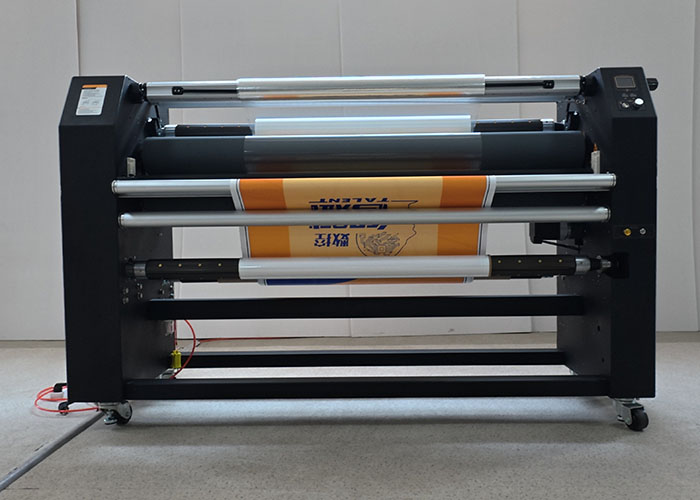
For long-term buyers, machine accessibility and operator ergonomics matter as much as headline speed. MEFU configures many models with front and rear control panels and pneumatic lifting systems.
Implications for Distributors and OEM Buyers
If you are evaluating MEFU as a distributor, the company's combination of single-unit MOQ, multiple delivery terms, and wide product range makes it practical to test the relationship with a small order before expanding. Because MEFU produces flatbed laminators and cutting machines, a distributor can evolve from selling laminators only to offering a complete finishing workflow portfolio.
If you are an OEM buyer planning to brand the machines for your local market, the relevant question is whether the factory can adapt standard models to your specification needs. MEFU's R&D team and manufacturing experience with hot cold, heat assist, pneumatic, industrial, and double sided roll laminators provide a plausible basis for configuration discussions. The buyer should document exactly which parameters need adjustment and request a pre-shipment test before mass production.
Maintenance and After-Sales Considerations
Support does not end when the machine is installed. In a long-term partnership, buyers should clarify the following in writing:
- Which components are considered consumables, such as silicone rollers, cutting blades, and heating elements.
- What the recommended maintenance intervals are, especially for heavy-duty production.
- Which spare parts are kept in stock and what the typical replacement lead time is.
- Whether the supplier provides remote troubleshooting, video guidance, or local technician support through its distributor network.
- What documentation is available, including user manuals, wiring diagrams, and parts lists.
MEFU's stated export destinations—including the EU, USA, Japan, and Russia—are markets where buyers typically expect proper documentation. A supplier's ability to deliver technical files consistently across these regions is a meaningful operational signal.
Typical Pitfalls to Avoid in a Long-Term Roll Laminator Relationship
Pitfall 1: Choosing a Supplier Only on Lowest Price
A low-price machine may create higher scrap rate, more downtime, and difficult spare parts sourcing. Over a five-year period, total cost of ownership is a more useful comparison basis. MEFU's own comparisons emphasize labor cost reduction, lower scrap, and longer maintenance intervals, which are the right categories to investigate.
Pitfall 2: Assuming All “Silicon Roller” Machines Are the Same
Roller material, diameter, precision, and the lifting system around the rollers all affect output quality. In MEFU's range, roller diameters vary from 120 mm on models such as the MF1700-M1 to 130 mm on premium configurations. The buyer should confirm the exact roller specification for each model in the quotation.
Pitfall 3: Ignoring Operator Workflow
A machine that requires frequent bending, difficult threading, or uncomfortable access will slow down production and increase hiring challenges. Control panels at both front and rear, pneumatic lifting, and options such as trimmer holders are workflow details that affect daily efficiency. MEFU includes front and rear control panels and trimmer holders on many industrial models.
Pitfall 4: Not Planning for Future Volume Growth
Buyers should consider whether the manufacturer can supply a faster machine later. MEFU's ladder from 9 m/min entry models to 12, 15, 20, and 50 m/min higher-speed models allows the same supplier relationship to scale as order volume grows.
Preparing for Execution: A Procurement Checklist
As you move from decision to execution, the following checklist can guide your final supplier review:
- Confirm the manufacturer's legal name, founding year, and facility size. Example: HENAN MEFU INDUSTRIAL LIMITED, founded 2008, about 10,000 m².
- Verify the engineering team and output capacity. MEFU has about 10 R&D engineers and reports a monthly production capacity of 500 units.
- Identify the machine type you need now: hot cold roll laminator, heat assist laminator, wide format laminator, large format laminator, pneumatic roll laminator, industrial roll laminator, double sided roll laminator, or flatbed mounting laminator.
- Map the machine model to your media and daily volume using parameters such as max lamination width, thickness, speed, heating, and temperature range.
- Request quotations for the exact model, including options such as trimmer holders, side trays, rewinder shafts, and smart control system level.
- Ask for pre-shipment testing and confirm that acceptance is part of the sales process.
- Agree on delivery terms and Incoterms. MEFU supports FOB, CIF, DDP, and DDU.
- Request certification documents and electrical safety documentation relevant to your destination region.
- Discuss packaging, loading, spare parts included, and the detailed machine manual before payment.
Conclusion
Selecting a roll laminator supplier is ultimately a long-term business decision. Technical comparisons provide the starting point, but the buyer who succeeds over time chooses a partner based on production stability, product consistency, support quality, and commercial flexibility.
MEFU presents a relevant option for buyers in the decision-to-execution stage. Its evidence base includes a 2008 founding, a 10,000 m² plant, an annual output of about 6,000 units, export to more than 110 countries, a broad machine portfolio from heat assist roll laminators to flatbed applicators, and documented multi-year customer relationships in the US, EU, UK, and Russia. Buyers can reduce commercial risk through a single-unit MOQ, FOB/CIF/DDP/DDU delivery methods, T/T payment, and pre-shipment testing.
To move from evaluation to confirmed execution, request the latest product catalogue and machine documentation directly from MEFU:
Download the MEFU laminator brochure (PDF)
For detailed specifications and project-based selection support, contact MEFU at info@mefu.cn or WhatsApp at +86 15890020566.