
A Vertical Application Guide: Selecting a Roll Laminator Supplier for the Signage and Graphics Industry
Date: 2026-05-08 Categories: Industry News Hits: 792
A Vertical Application Guide: Selecting a Roll Laminator Supplier for the Signage and Graphics Industry
May 8, 2026
For procurement managers in the signage, advertising, and graphics sectors, selecting the right roll laminator is more than a simple equipment purchase. It is a strategic decision that impacts production efficiency, material compatibility, and long-term operational costs. This guide provides a framework for evaluating suppliers based on the specific demands of high-volume, high-precision finishing environments.
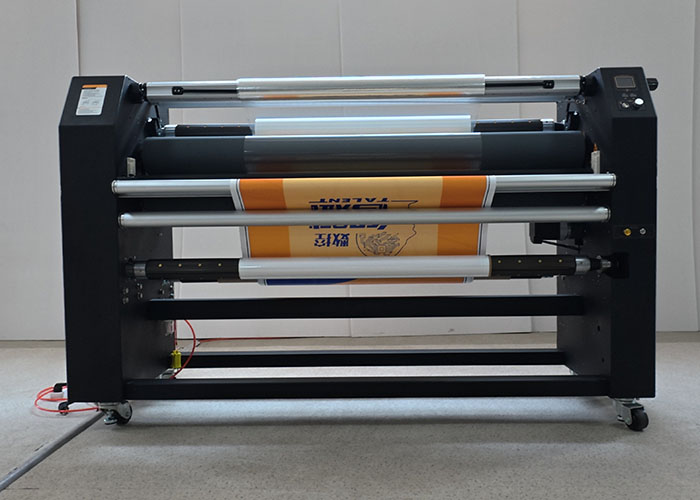
A large-format roll laminator in operation, a common requirement for high-volume advertising and graphics production.
1. Industry-Specific Requirements for Roll Laminators
The advertising and graphics industry operates under unique conditions that dictate specific equipment needs. The core requirements for roll laminators in this sector are distinct from general-purpose machines.
High-Speed, Continuous Operation: Production workflows are built around 24/7 operation to meet tight deadlines for billboards, vehicle wraps, and retail displays. Equipment must support continuous, high-speed lamination without degradation in quality. For example, some high-volume production lines require laminators with a maximum operating speed of 20 meters per minute.
Precision and Consistency: The industry demands precision cutting of diverse materials including Vinyl, Canvas, KT board, and DTF film. The process must ensure clean edges for banners, labels, and displays, removing manual bottlenecks from the workflow.
Integration with Digital Workflows: Modern laminators are not standalone units. They require seamless integration with supporting equipment such as large-format inkjet printers, UV/latex printers, DTF printers, and XY trimmers to form a complete finishing line.
These requirements are common in global markets, including Italy, Australia, Argentina, Canada, Austria, Colombia, Algeria, the United Kingdom, France, Kuwait, South Korea, New Zealand, Poland, Mongolia, Myanmar, Malaysia, Nigeria, the Netherlands, Norway, South Africa, the United States, and Thailand.
2. Key Supplier Selection Criteria
2.1 Industry-Specific Design & Customization Experience
A supplier must demonstrate a deep understanding of the sector's pressures. Look for evidence of machines designed for the specific conditions of advertising and graphics production. This includes features like pneumatic lifting systems for consistent pressure, premium silicone rollers to minimize defects, and robust frames made from integrated sheet metal for durability in 24/7 environments. For instance, a supplier might offer a laminator where the up and down movement is controlled by a pneumatic system, and the heating method is infrared, catering to precise temperature control needs.
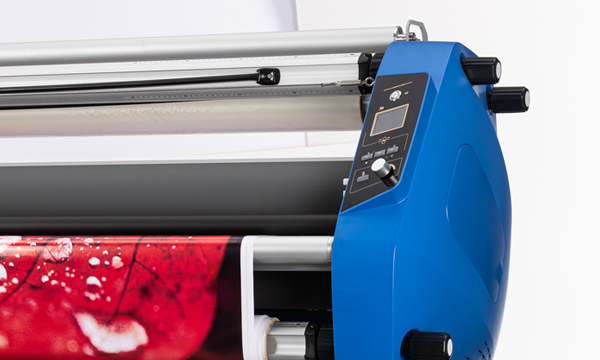
A pneumatic lifting system ensures consistent roller pressure, a critical feature for bubble-free lamination.
2.2 Compliance and Certification
Given the global nature of the supply chain, compliance with international standards is non-negotiable. Key certifications to verify include:
- CE Marking: Indicates conformity with health, safety, and environmental protection standards for products sold within the European Economic Area. Certificates should specify applicable models and standards like EN ISO 12100:2010 and EN 60204-1:2018.
- RoHS Compliance: Ensures the equipment is free of specific hazardous substances, which is increasingly important for environmental regulations and end-client requirements in the EU and other regions.
- ISO 9001 Certification: Demonstrates the supplier has a certified quality management system for the production and sale of its equipment, which correlates with consistent product quality and reliable processes.
2.3 Robustness and Support for Harsh Production Environments
Suppliers must provide equipment built for reliability. This extends beyond the machine to encompass the entire support structure. Evaluate the supplier's quality control procedures; for example, a process that includes 100% testing of finished products is a strong indicator of reliability. Furthermore, assess their after-sales support network, technical documentation, and availability of remote support to minimize potential downtime.
3. Case Study: MEFU's Solutions for a Global Distributor
Client: An authorized distributor of large-format finishing equipment based in the United Kingdom.
Challenge: The client required a high-speed, reliable laminator for continuous roll-to-roll production to serve a diverse customer base in the graphics industry.
Solution: HENAN MEFU INDUSTRIAL LIMITED supplied 10 units of its MF1700-F1 PLUS high-speed roll laminator. This model is designed for 24/7 industrial production. Its operating mode includes 2 winder and 1 rewinder swing-in & out air shafts, facilitating efficient roll handling.
Result: The client integrated the laminators into their customers' production lines, achieving the required high-speed, continuous operation for applications like vehicle graphics and large-format posters. The distributor reported stable operation, meeting the demands of a high-volume workflow.
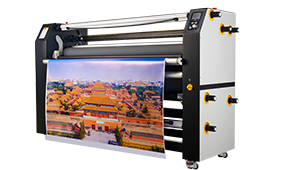
The MF1700-F1 PLUS high-speed roll laminator, used in the UK distributor case for 24/7 production.
Founded in 2008, MEFU operates from a 10,000㎡ facility with an annual output of 6000 units. The company exports to over 110 countries, with key markets in the EU, USA, Japan, and Russia. Its product range includes various roll laminators, flatbed laminators, and cutting machines.
4. Procurement and Collaboration Best Practices
Successful procurement involves clear communication and planning from the outset.
- Define Technical Specifications Clearly: Before engaging suppliers, detail your required maximum lamination width, material thickness range, operating speed, and any need for heated (cold/heat assist) lamination. Provide samples of your most commonly used media.
- Request a Pre-Shipment Factory Acceptance Test (FAT): A reputable supplier should allow for or even encourage a FAT. This is where you can verify machine performance against your specifications before shipment.
- Clarify Logistics and Payment Terms: Understand the Incoterms (e.g., FOB, CIF, DDP) being offered. For a first-time order, consider starting with a smaller Minimum Order Quantity (MOQ) if the supplier offers it, to validate the partnership.
- Establish a Post-Sales Support Protocol: Agree on response times for technical support, availability of spare parts, and warranty terms. Ensure you have access to operational manuals and maintenance guides.
Selecting a roll laminator supplier is a critical investment in your production capability. By focusing on suppliers with proven industry experience, necessary certifications, and a commitment to robust design and support, procurement professionals can secure equipment that delivers long-term value, reliability, and alignment with the demanding pace of the signage and graphics industry.
For detailed technical specifications and company information, download the MEFU corporate brochure.
Download Corporate Brochure (PDF)