
How to Source Roll Laminators Efficiently and Avoid Supply Risks
Date: 2026-06-21 Categories: Industry News Hits: 325
How to Source Roll Laminators Efficiently and Avoid Supply Risks
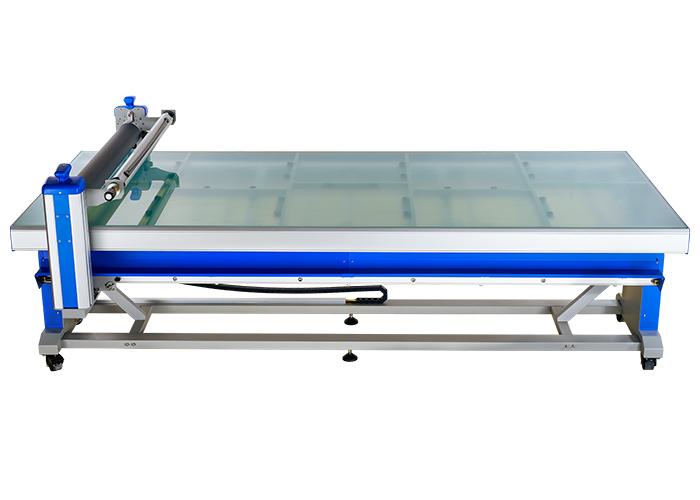
Image: Flatbed Applicator Table – a key finishing solution for rigid substrates. (Source: MEFU)
Introduction
Purchasing a Roll Laminator is not a commodity transaction. It is a strategic investment that directly affects production throughput, material waste rates, and the final quality of signs, banners, and graphic displays. Yet many procurement professionals find themselves trapped in a cycle of delayed deliveries, inconsistent machine performance, and hidden post-purchase costs. How can you complete the procurement efficiently while systematically avoiding cooperation risks?
This guide is designed for industrial buyers, print shop owners, and procurement managers who need a Large Format Laminator, Heavy Duty Roll Laminator, or High Speed Roll Laminator. We will walk through a structured sourcing framework, risk mitigation tactics, and supplier evaluation criteria — all based on real industry data and proven practices.
Problem Definition: The Real Cost of a Bad Roll Laminator Purchase
Buying a Roll to Roll Laminating Machine involves more than comparing price lists. The core risks include:
- Inconsistent lamination quality – bubbles, wrinkles, or peeling after a few weeks.
- Downtime due to mechanical failure – especially in 24/7 production environments.
- Unforeseen operational costs – high power consumption, frequent roller replacements.
- Supplier non-compliance – missing certifications, delayed shipments, or lack of after-sales support.
These issues are not hypothetical. A survey of wide-format print shops indicates that nearly 35% of first-time laminator buyers face at least one major quality or delivery problem within the first year. The solution lies in a disciplined procurement process that addresses both technical specifications and supplier credibility.
Industry Background: The Roll Laminator Ecosystem
Roll laminators are the workhorses of the signage, digital printing, and industrial finishing industries. They apply protective or decorative films onto printed media (vinyl, paper, canvas) or rigid boards. The market offers several categories:
| Type | Typical Speed | Best For |
|---|---|---|
| Manual / Cold Laminator | 0–6 m/min | Low-volume, occasional jobs |
| Hot Cold Roll Laminator | 6–15 m/min | Standard graphic production |
| Heavy Duty Roll Laminator | 6–20 m/min | 24/7 industrial environments |
| High Speed Roll Laminator | up to 50 m/min | High-volume roll-to-roll finishing |
Key technologies that differentiate modern machines include pneumatic lifting systems (consistent pressure), infrared heating (energy-efficient heat assist), and smart control panels (front and rear operation). Leading suppliers like MEFU (HENAN MEFU INDUSTRIAL LIMITED) offer a complete portfolio from entry-level Vinyl Roll Laminators to Industrial Roll Laminators with CE and RoHS certifications.
Detailed Solution: A 6-Step Procurement Framework
Step 1 – Define Your Production Profile
Before contacting any supplier, answer these three questions:
- What media types will you laminate? (Roll-fed vinyl, rigid boards up to 50 mm?)
- What is your throughput? (Meters per day? Shift operation?)
- Do you need heat? (Cold-only is simpler; heat-assist improves adhesion for certain films.)
For example, a shop that laminates 200 sqm of vehicle wrap vinyl daily should target a Wide Format Laminator with pneumatic pressure and heat assist, such as the MEFU MF1700-M1 PRO.
Step 2 – Evaluate Technical Specifications
Critical parameters beyond maximum width:
- Roller diameter and material – premium 130mm silicone rollers reduce scrap by up to 90% (MEFU data).
- Pressure system – pneumatic lifts deliver consistent pressure vs. manual hand cranks.
- Heating method – infrared top-heated systems offer faster warm-up and lower energy costs.
- Control interface – front and rear panels improve operator efficiency.
Step 3 – Verify Quality Certifications
Certifications are non-negotiable risk reducers. For example, MEFU’s laminator series holds CE certificate (no. TST20240302124-1SC) covering safety standards EN ISO 12100 and EN 60204-1, plus RoHS compliance for EU markets. An ISO 9001:2015 quality management system (cert. 16423Q31198R0S) ensures consistent production. Always request copies and cross-check with the issuing authority.
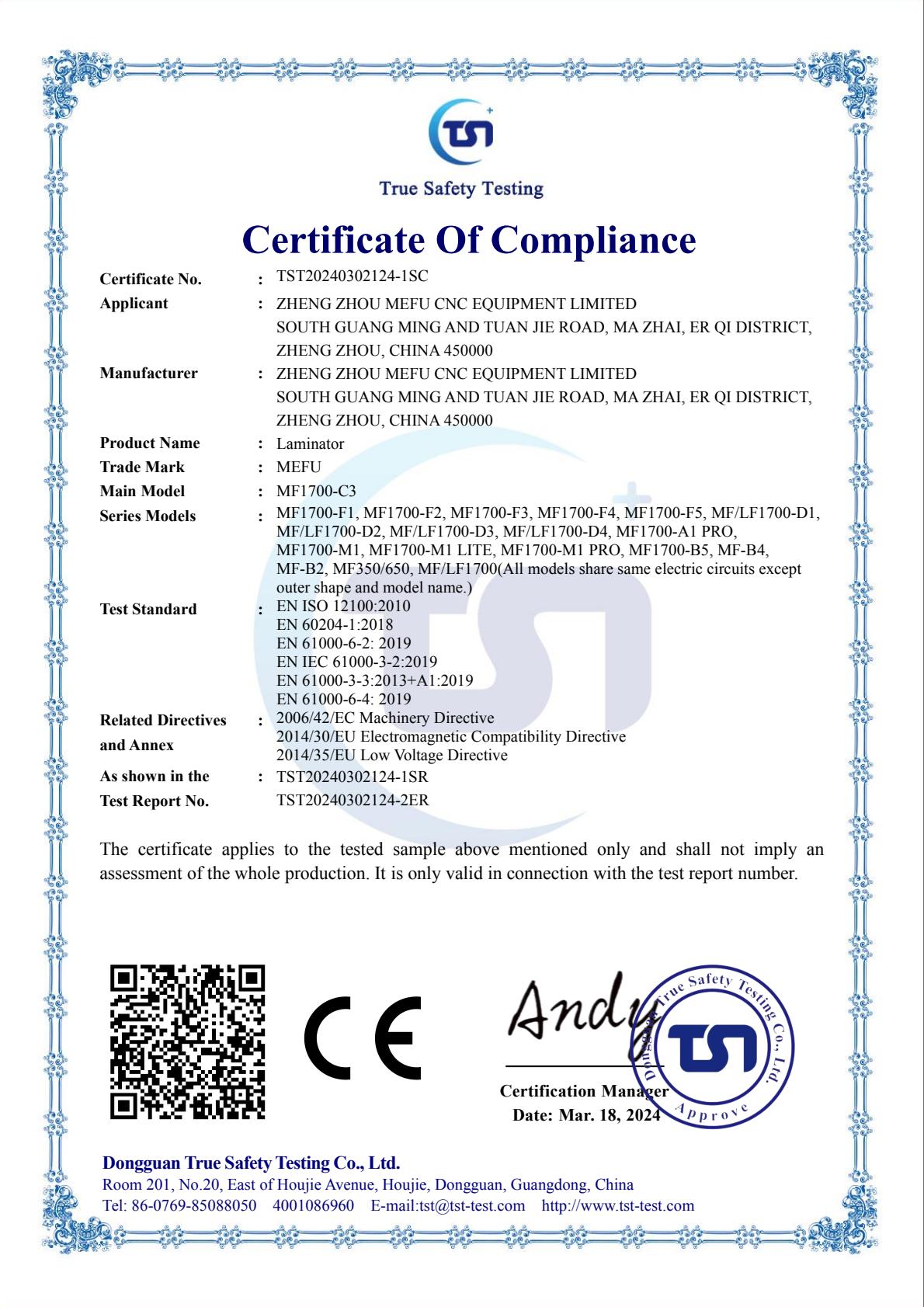
Image: CE certification for MEFU laminator series, valid until 2029.
Step 4 – Assess Production & Delivery Capabilities
Ask suppliers for concrete production data. MEFU, for example, operates a 10,000 m² factory with a monthly capacity of 500 units and a standard lead time of 14 days. They offer OEM customization (size, color, voltage) from a minimum order quantity of 1 unit. Their export ratio is 40%, covering EU, USA, Japan, and Russia — a sign of international compliance experience.
Step 5 – Understand Payment & Logistics Terms
Transparent procurement terms reduce financial risk. Standard practice for professional suppliers:
- Payment: T/T (Telegraphic Transfer)
- MOQ: 1 unit
- Delivery: FOB, CIF, DDP, or DDU
- Acceptance: Pre-shipment test included
These terms allow you to control inspection before payment and choose the Incoterm that fits your logistics comfort.
Step 6 – Arrange Risk Controls for Daily Operation
Once the machine arrives, common risks like bubbles, overheating, or abnormal speed should be proactively managed. Look for built-in features such as:
- Premium silicon rollers for bubble-free lamination
- Laser speed sensors with emergency stop buttons
- Temperature sensors for thermal protection
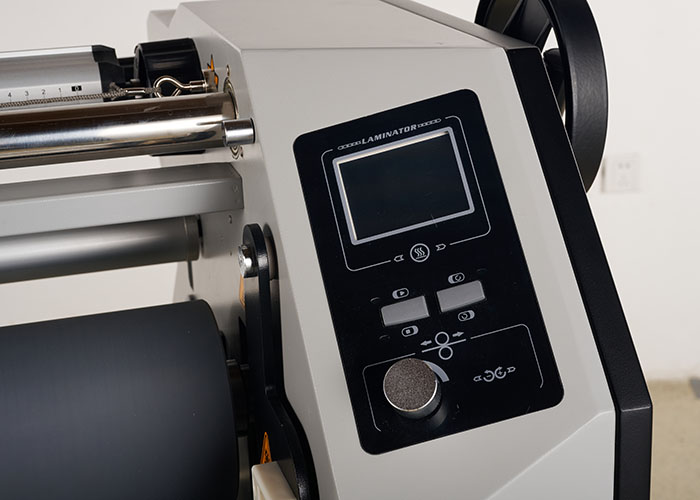
Image: Pneumatic lifting system ensures consistent pressure and reduces bubble formation.
Use Case: How a UK Distributor Avoided Risks with a Structured Approach
A distributor in the United Kingdom needed a reliable High Speed Roll Laminator for 24/7 production of vehicle graphics. They evaluated five suppliers using the framework above. They selected MEFU for their certified quality (CE + ISO 9001), after-sales support (remote support included), and the option of a pre-shipment test. Over five years, they purchased 10 units and reported stable, around-the-clock operation with no major breakdowns. The key lesson: investing time in supplier validation upfront eliminated costly downtime later.
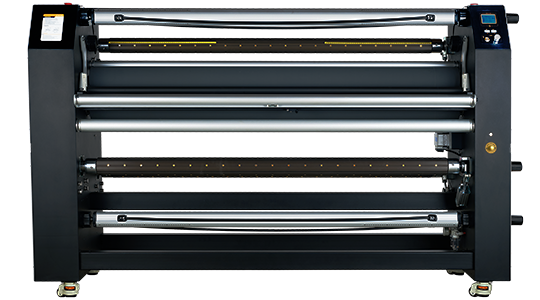
Image: MF1700-F1 PLUS in a high-volume finishing environment.
Frequently Asked Questions (FAQ)
What is a Roll Laminator?
A Roll Laminator is a finishing machine that applies a protective film (gloss, matte, or textured) onto printed roll media or sheets. It uses heated or cold rollers and is essential for extending the life of signage, posters, and decals.
How does a Roll Laminator work?
Media passes between two or more silicone rollers under controlled pressure (pneumatic or manual). If equipped with an infrared heating system, the film is activated to ensure strong adhesion. Rewind shafts collect the laminated output for easy handling.
Who uses a Roll Laminator?
Print shops, sign makers, photo labs, packaging companies, and industrial finishing departments. Virtually any business that produces large-format graphics or protects printed surfaces.
How do I choose between a cold laminator and a heat-assist laminator?
Cold laminators (e.g., MEFU MF1700-B5) are simpler and cheaper, ideal for temporary or indoor use. Heat-assist laminators (e.g., MEFU MF1700-M1 PLUS) provide a more durable bond, especially for outdoor graphics and rigid board mounting.
What is the risk of buying from an uncertified supplier?
Without CE, RoHS, or ISO certifications, you risk machine failure, safety hazards, and even customs rejection at import. Always request valid certificates before committing.
Conclusion
Efficient procurement of a Roll Laminator is not about luck — it is about following a repeatable, risk-aware process. Define your requirements, verify technical specs, check certifications, assess supplier production capacity, agree on clear payment and delivery terms, and plan for operational risk controls.
By applying the framework outlined here, you can reduce the likelihood of a bad purchase and secure a finishing solution that delivers consistent quality for years. For a detailed look at MEFU’s product line — from the Double Sided Roll Laminator to the Flatbed Mounting Laminator — download the full brochure below.
Get the Complete Product Brochure
Download PDFIncludes technical specs, certifications, and case studies.